

Yara Al Mouti grew up in Amman, in a family she describes as obsessed with literature. She remembers wanting to be a writer when she grew up.
She did become a writer, just not the sort of writing she probably envisioned as a child. Over her 27-year career as an engineer, Yara has written countless technical documents – protocols for buildings, water systems, air handling, utilities, laboratory and production equipment, processes and cleaning, gap assessments, diagnosis reports, task plans, procedures and training programmes. Writing that helps pharmaceutical manufacturers stay compliant in six countries.
Yara studied chemical engineering technology at Al-Balqa Applied University in Salt. She completed every internship at a pharmaceutical company. She fell in love with the industry, she says, and what it did for people’s lives. Her first job after graduating was outside it. Three years at The Chemical and Mining Co. as a quality engineer on the production lines for slurry explosives. In 2002, she moved back to pharma.
Working in slurry explosives, she says, taught her the importance of process control, safety and quality. Both are industries where a deviation can kill. What differs is when you find out. An explosives line fails in real time. The impact of a contaminated batch is often felt weeks later, perhaps in a different country. Quality, she learned, cannot rest on merely testing the finished product; it must be built in at every stage of the process and proved on paper as it goes. She became invested in prevention, risk assessment, accurate record-keeping, and investigating deviations minuscule enough to wave through.
beautiful country
Jordan has no oil of its own. Its pharmaceutical industry is a key sector of the Jordanian economy. The Chamber of Industry pegs export value for pharmaceutical preparations at JD642 million for 2025, according to the Department of Statistics via Petra. A December 2025 sector report by Zawya attributes roughly seventy per cent of pharmaceutical and medical supplies exports to five markets including Saudi Arabia, Iraq, Algeria, the UAE, and the United States.
Unlike the garment and mining sectors, which are larger exporters but employ predominantly migrant workers, it relies heavily on credentialed knowledge workers – engineers, chemists, validation and regulatory specialists. Jordan has one of the lowest rates of female labour force participation in the world, 13.5 per cent by World Bank figures for 2025; the International Growth Centre puts it around fourteen per cent and fourth lowest in the world. Inside pharmaceutical manufacturing, this is starkly different; the Jordan Chamber of Industry puts women at around thirty-five per cent of the workforce.
Yara has been walking into these factories since 1999. When asked if being a woman has ever changed how a client, a contractor or an inspector engaged with her, she declines specifics, then answers anyway. “I don’t prefer to discuss specific cases, but at the beginning some clients did not believe in my capabilities, assuming a woman would not be able to deliver. But with time, and with repeated success stories and interactions, I think now this obstacle is not present.”
quality baked in
In a country that, by the Chamber of Industry’s count, exports to 85 markets worldwide, compliance isn’t merely overhead but critical manufacturing infrastructure.
She learned the inner workings of the process while working for Advanced Pharma in 2002. She sat on the steering committee preparing for EU registration and on the validation steering team, writing and executing the protocols; as part of quality assurance, she designed and ran internal audits across every department. What she took with her, she is still selling: inspection readiness, she says, is not something you prepare for just before an audit. It has to become part of how the organisation runs every day. She says inspectors look past documentation to whether quality is actually embedded.
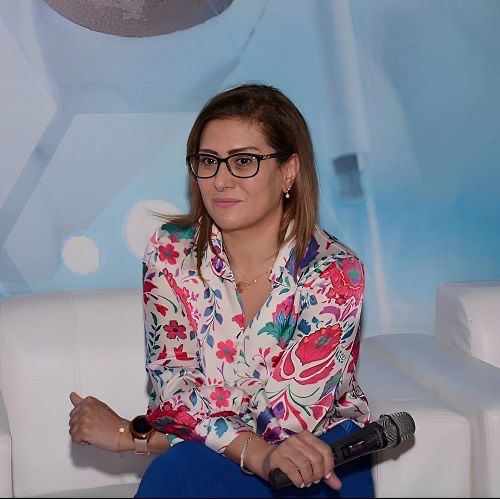
Yara went on to manage projects at TIS Consultancy and joined Naratech in 2008, where she designed the training department’s strategy each year and ran it from proposing the workshops and conferences through securing sponsorships and delivering them.
She talks about her father when asked for an early memory that still applies to her work. “I have always admired my father’s dedication and patience. His ability to learn all his life. I carried this through my life, learning with dedication and not stopping the learning journey till now.” Patience and continuous learning are both attributes of a validation engineer, someone who knows results often arrive long after the work is complete.
agon and what is built in
Her company, Agon Pharmaceutical Consulting, which she started in 2010, tells manufacturers where they fall short. It runs gap assessments for GMP, GLP, and good storage and distribution practices. It then establishes the quality systems to close them and qualifies and validates equipment and processes that regulators want proven.
A key part is training: documentation, process control, quality assurance, validation, and statistics. She started it, she says, to build regional capability in GMP and regulatory compliance, which until then was farmed out to international consultants. Subjects that sell are what a regulator will ask about, rarely quality culture, leadership, critical thinking or communication. Companies buy the latter, she says, when it balloons into a recurring problem or inspection finding, not before.
Training a client well makes the client need you less. Asked if that really happens, she says yes, but that she counts it as a measure of success. She tells of a manufacturer who had been working with outside consulting for validation and internal audits. Agon ran a structured programme and coached the team through live projects. In a few short months, the team was writing its own validation protocols, running its own audits and handling its own deviations. Agon’s role faded to occasional advice on the complicated stuff.
Agon, Yara says, “has been intentionally built around collective expertise rather than depending on one individual.” Her team of ten has eight women. They’ve worked on projects in six countries – Jordan, Saudi Arabia, Egypt, Palestine, Yemen and Iraq. Facility redesign, material and personnel flow, layout against international GMP standards in Yemen. An Iraqi facility built from the ground up. She says, “The ultimate measure of success is creating an organisation where the founder’s role is to provide direction and growth, not to be the only source of knowledge, decisions or value.” Agon is sixteen years old, and she has spent most of them making sure it will not need her.
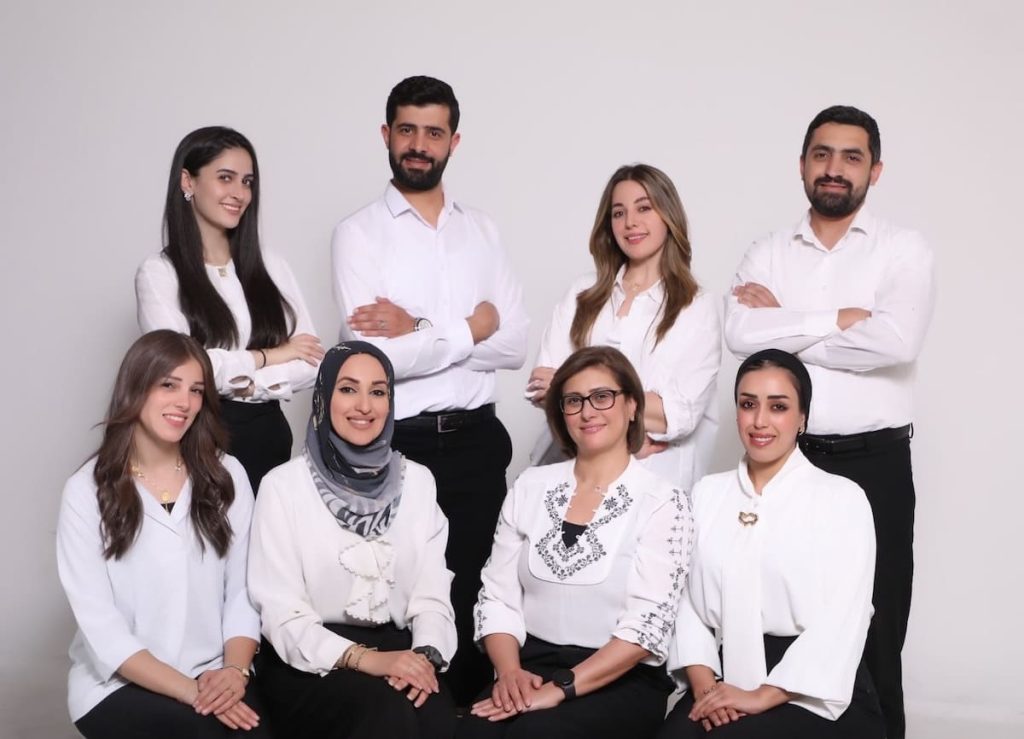
She is straightforward in what she wants from the people around her. A trusted team member, she says, is not someone who always agrees with the leader, but someone who confidently and responsibly flags issues early. She tells of a project where a colleague told her the technical recommendations were right, but the implementation timeline wasn’t. It hadn’t accounted for how much work the client’s own staff were carrying. She had been focused on achieving the technical objective; the colleague pointed out the practical limitations. The plan was rebuilt.
Yara has served on the board of Jerusalem Pharmaceuticals Co, Al-Bireh, since 2024. The group includes Jordan River Pharmaceuticals and a veterinary and agricultural arm. Consulting gives her a defined problem. The board seat requires her to hold quality, compliance, finances, capacity and strategy all at once, and it changed her advice. She used to recommend fixing several things at once to reach compliance quickly, but now phases the work by business risk and what a client can absorb while still producing.
september in cairo
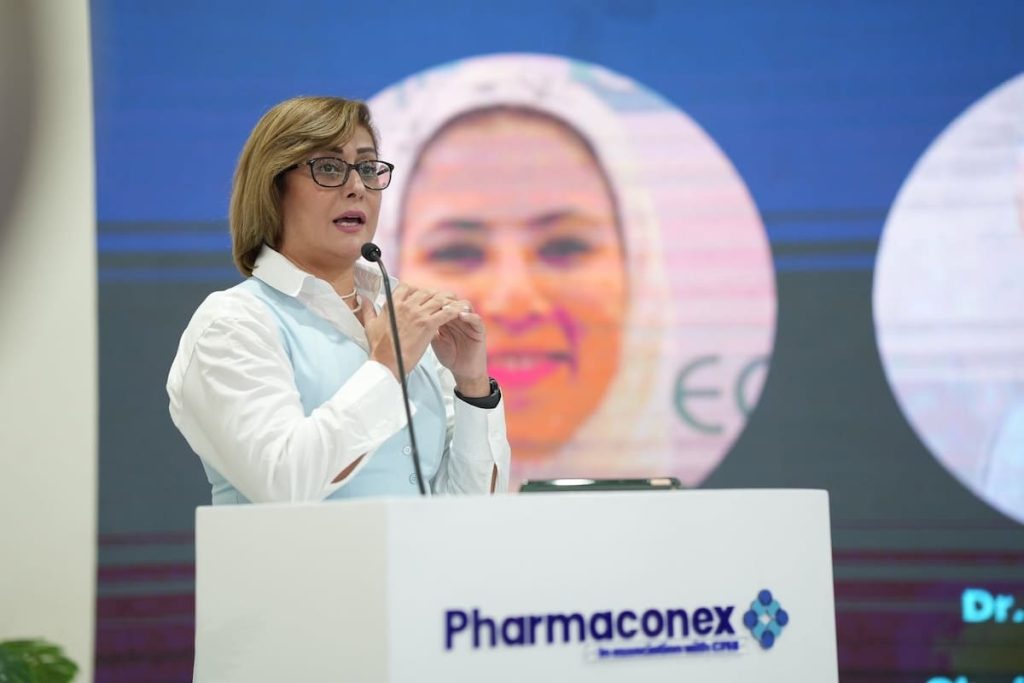
Yara is speaking at Pharmaconex, Egypt, in September. Her fireside chat with Dr Abdullah Al Mesned, CEO of Bana Medical Company, focuses on opportunities for KSA and Jordan to collaborate for pharma innovation.
The Kingdom is the largest pharmaceutical market in the Middle East, annually between SAR 40 – 45 billion and it currently imports most of its medicines. Pandemic-era supply disruption turned that dependency into a security question, and localisation became a national policy diktat under Vision 2030. For an exporter in Jordan, this is a door closing via policy.
Jordan’s regulator reached its own milestone on January 1, 2026, when the JFDA joined PIC/S as the 57th participating authority and the second Arab regulator to gain full membership. Two months later, the Jordanian manufacturers’ association was sounding an alarm about growing Saudi and Emirati domestic production as a competitive threat. The change is narrow but practical. A GMP certificate issued in Jordan is recognised by fifty-six other authorities, making the capability now portable.
Factories can be rapidly built with money. Inspections, validated systems and expertise take longer, and the Kingdom is investing in that capacity at speed. Yara signed a partnership with LOGIC Consulting in Riyadh in late November 2025, weeks before Jordan’s PIC/S membership came into effect.
writing, of a kind
On September 1, Yara is leading a four-hour workshop at Pharmaconex on artificial intelligence inside a regulated plant: what a regulator will require, where the technology pays its way, how these systems fail and how to begin without wagering the whole factory. Her own agenda for the session calls validating AI the hard part. She’s right. She’s talking about a space that no one fully understands yet. The American guidance has been in draft mode since January 2025. The principles issued jointly with Europe in January 2026 are high-level, not requirements. Her clients’ own regulators have published nothing on it that we could find. What exists is industry guidance written by working engineers through ISPE, the body whose Middle East steering committee she has led since 2022.
The industry has been here before. In the ’90s, computerised systems arrived in pharmaceutical plants faster than any regulator could define what to do with them. The answer eventually came from a forum of suppliers and practitioners who wrote the GAMP framework themselves. Industry and regulators alike work from it, and it’s unlikely anyone from outside the discipline knows their names.
The committee Yara leads is the closest thing her region has to that forum. She speaks plainly about why it is hard: every country has its own regulatory framework, its own business environment, and it stands at its own unique stage of industrial maturity. The volunteers building it all have full-time jobs.
It is what she’s been doing since 2002 – writing protocols in a plant preparing for a European inspection. Documenting in advance what will have to hold true long after she’s left the building. She wanted to be a writer. This is the writing.
