

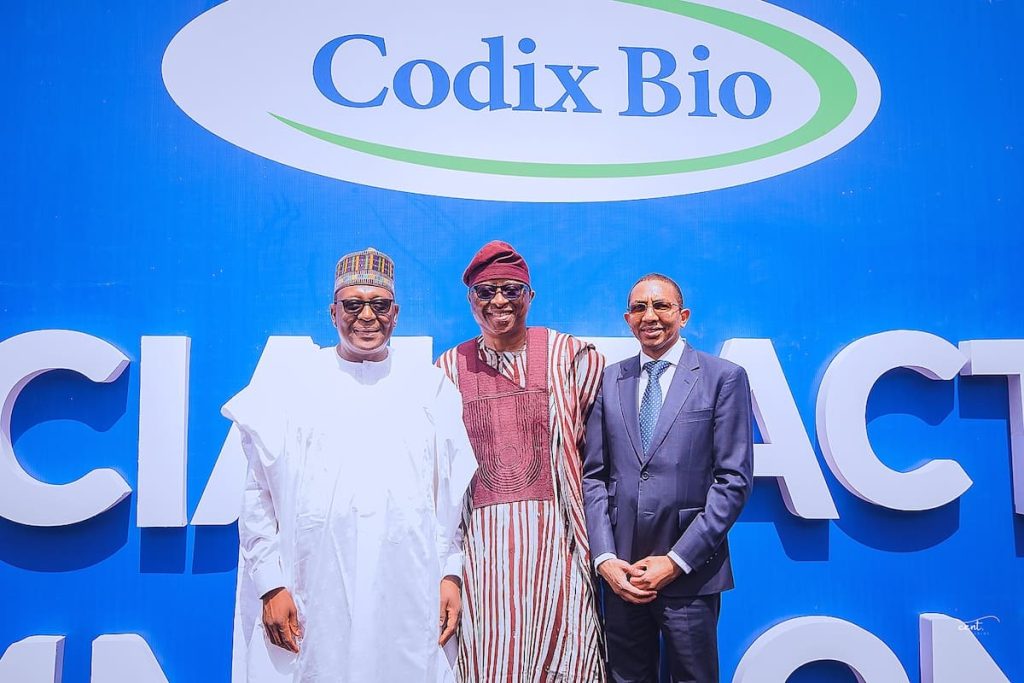
In 2009, a team of endocrinologists in Lagos, Nigeria, came together to deliberate how diabetes should be treated in Nigeria. No state or national guideline for diabetes existed until that point. No peer-reviewed guideline. Every hospital had its own protocol; treatment depended on which doctor you consulted. At the end of that week, Lagos State produced Nigeria’s first official diabetes treatment protocol.
Before the Lagos State guideline was produced, funded entirely by Codix Pharma, there had been talks of getting one drafted at the national level, with no success. It involved far too much red tape. Lagos State, always at the forefront of innovation, moved quickly. And some months later, Nigeria also got its first national guideline for diabetes treatment from the Diabetes Association of Nigeria, and it was based on the first.
When Sammy Ogunjimi, CEO of Codix Group, tells this story, he declines any credit. “We were just a tool to bring the people who made it possible in record time together,” including Dr Ogbeira at Lagos State Teaching Hospital, Professor Fasanmade at Lagos University Teaching Hospital, and Dr Afokoghene Isiavwe, a leading endocrinologist- all brilliant minds in their field.
The Lagos State guideline had an interesting problem – it called for a blood test, the HbA1c, the one that reads control across months rather than the reading of a single morning. At the time, HbA1c testing was not readily accessible in Nigeria. So Codix started importing analysers.
Eighteen years of solving one thing and finding that there was another equally compelling one to solve lurking underneath, a permanent Sisyphean state. It is the shape of Codix’s DNA, sequenced repeatedly in its natural form.
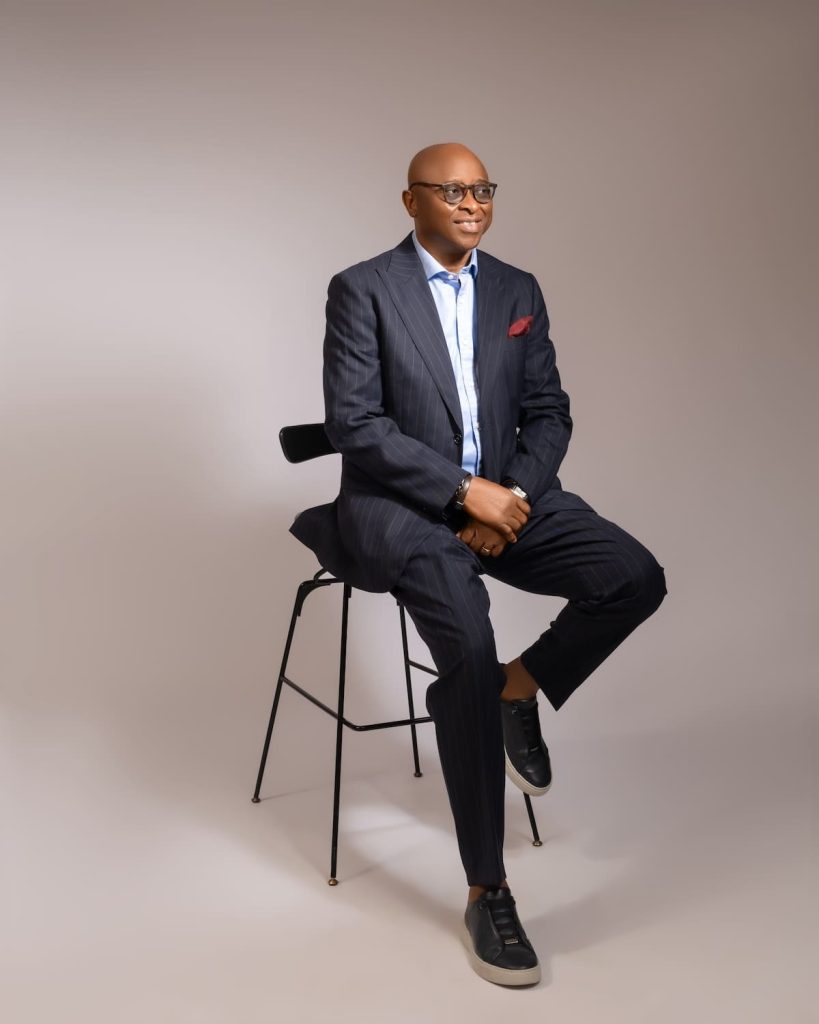
Sammy talked to us from the UK, where he’s spending a few days, “an escape, just for a short while, before I go back again to the battle.”
The battle he speaks of is Nigeria’s healthcare puzzle, in which his Codix Group is a consequential actor.
the no he wouldn’t accept
His story is usually told as a homecoming. A successful Nigerian pharmaceutical executive comes home because his country needs him. It’s been written about enough times to be established lore.
But the real backstory is far more telling. Sammy didn’t plan on leaving Merck, where he had spent the better part of his formal career; he wanted to bring Merck to Nigeria with him as his career development plan. He was already on his final salary pension and would have happily stayed another five years with the multinational he wanted to take home with him. The UK office sent him to Lyon to discuss it. During the meeting, he realised that what they really wanted was a distributor, not an office in Africa, in Nigeria at the time. He was very disappointed.
“When I get a no, I’m usually not very happy, especially if I feel that it’s something that needs to be done and I’m getting a no.” It didn’t help that he’d risen far enough up the ranks to know what ought to be done for his team but not senior enough to authorise it without permission. “So I knew that I had to have a business where, whatever I feel is right, I can do it without anybody telling me not to do it.”
When he told people he was going, a colleague asked why he was going back to the jungle. He still remembers who said it.
Barrister Oduwobi, who became friends with Sammy when they met in a university hostel in 1983, says “he’s very resolute about anything he sets his mind to. He makes up his mind quickly about what he wants to do, and he pursues it with all the vigour that he can muster.”
Four decades later, it’s still the most accurate account of all that follows – a pattern that comes along often, like the diabetes guideline, the self-financed factory, the training programmes.
who killed longevity
Growing up, every really old person he knew was over a hundred. “Old people who weren’t going anywhere”. Something that changed significantly in his own lifetime. Folks used to stop counting their years after a certain point; but here they were dying of stroke, heart failure, diabetes and their complications before they could celebrate their seventieth birthdays. “Seventy used to be young.” He’s clear about the sheer scale of the problem that Nigeria and the larger African continent have to tackle. Disease patterns. Emerging diseases. A problem bigger than the sum of all its parts.
During his time at Merck, he witnessed first-hand as Merck and Roche built an entire speciality out of thin air, seeding heart failure nurses across London until they became practitioners. His own project in collaboration with a nurse from London Chest Hospital was to design a course that trained them. “If Nigeria had these interventions, my aunts wouldn’t be having strokes without knowing they had diabetes or hypertension before.”
He always knew that whatever he did back home in Nigeria would revolve around cardiometabolic care. Nigerian companies were focused on antibiotics, antimalarials and painkillers at the time. It was a field he knew from the inside.
At Merck, he also learned to think in outcomes. A sustained-release medication launched because patients who did well in hospital often messed up dosages and fared badly at home. “Not just a patient going to see a doctor”, but the ecosystem working together for a favourable outcome. He knew what was missing back home in Nigeria because he’d seen what was in the UK.
two cars, one car
There were decisions to be made. He says twice that his wife, Elizabeth’s agreement was the condition the whole thing rested on: “having her support on that journey was the most critical. And without that, I don’t think it would have been possible.” They had a child in private school, so the fixed point became their fees; everything else worked backwards from that number. Two cars could become one car. There could be fewer holidays. Income wouldn’t necessarily arrive on schedule.
He mitigated as much risk as possible by setting up a consumer sexual health company that also helped fund his initial efforts in Nigeria.
Codix Pharma saw life in 2008 as an importer, something Sammy was an old hand at. All through his twenties, he tried his hand at a number of trades – he sold cars, trucks, second-hand refrigerators, scouting for things that would sell on his trips home to Nigeria.
The trading stopped when Merck hired him in 1999, but it gave him an edge in 2008. He’s clear to make a distinction between the two, though. His earlier trading, he says, was to make money and cover expenses. It was hardly a business.
trading places
Barrister Oduwobi talks of how Sammy used to say that the day he left Merck, he would build a company in Nigeria. When he did, Oduwobi filed the paperwork for him.
The early years were complicated. Sammy was in London, and the company was in Lagos, and operational struggles took a lot out of him. Oduwobi saw him dust off each setback, infusing in the team a drive to push onward despite it all.
One of the early products Codix imported, blood glucose strips, was a defensive choice, because it sold to private enterprise. “It was survival for the business and sustainability for the future.” The public market involved lobbying for tenders, and then lobbying to be paid, red tape he has little patience for. The first product that mattered was a malaria test kit, which drew international attention long before anything else did.
He could have stopped at distribution. But in Nigeria, where every few years, the naira would turn, and the foreign exchange market would seize, a business that imported everything would need dollars for all of it. The Central Bank will supply 5 per cent of the foreign exchange, and the rest has to be sourced from parallel markets; the import business can quickly become a survivalist game. Despite this, he says, distribution is easy.
Manufacturing, when Codix came to it in 2023, wasn’t as much about African self-reliance as it was about currency arithmetic. To import a finished product, you need a whole dollar; import the raw materials to make that product, and you need 50 cents. Export the product and you earn foreign exchange. It was a way to stop the bleeding that quickly became the heart of Codix’s capability strategy. Import less, make more.
When Covid arrived, Codix imported vast numbers of antigen test kits, all while the government was still in denial. PCR was unaffordable and slow, and people went home, waiting for a result that came long after they’d passed on the infection to those around them. Things changed only when prominent Nigerians started to die. That’s when the absence of a manufacturing ecosystem really hit home. At that point, the plant stopped being a hedge. Sammy poured personal resources into building a factory with another partner.
the missive to Geneva
During Covid, the world spectated at inequity in vaccine availability for Africa and much of the global South – a fault line of broken supply chains. The pandemic held up a mirror, and the reflection was ugly. The WHO’s C-TAP, the COVID-19 Technology Access Pool, was born from that reckoning. When C-TAP evolved into the Health Technology Access Pool (H-TAP), it also changed the conversation about local manufacturing from a polite aspiration to the crux of African manufacturing self-reliance discourse.
Codix had already engaged South Korea’s SD Biosensor long before H-TAP became the buzzword in Geneva. But Sammy is not a man for half-measures. He used the H-TAP framework, brokered by the WHO and the Medicines Patent Pool, to formalise the deal and to megasize it.
It was an ultimatum in the inverse, Sammy’s very own UNO reverse card.
Sammy wrote to USAID explaining why Codix had the capacity to make rapid diagnostic kits but would not make them. Not unless he was guaranteed a buyer. The letter travelled further than he expected and came back via a fellow Nigerian at UNITAID who refused to believe there was an in-vitro diagnostics factory in Nigeria. He flew down to look and found the machines exactly where the letter said they’d be.
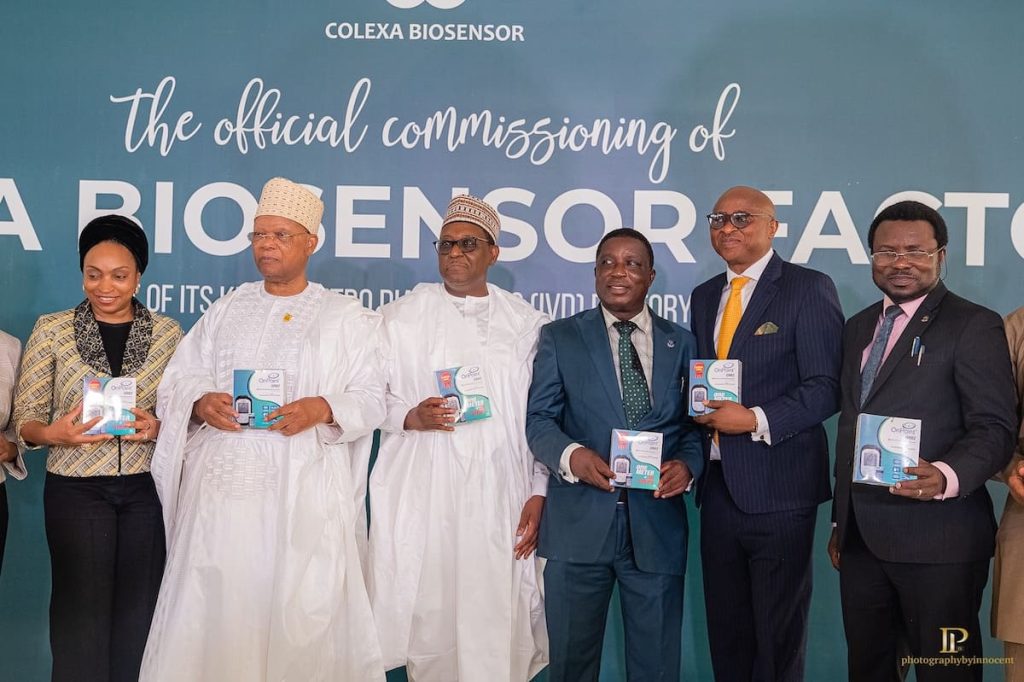
The Medicines Patent Pool and SD Biosensor brought Codix Bio into the fold, turning the Sagamu plant in Ogun State into the first partner factory under the WHO programme. The stepping stone was a Change Notification approval in January 2025: sister company Colexa Biosensor would package an already WHO-prequalified HIV test at its Lagos facility, the first time, by his account, anyone had done that in Africa. That was the foot in the door. By May 2025, the larger H-TAP sublicensing deal was commissioned at Sagamu, with technology transfer for rapid diagnostic tests covering HIV, malaria, hepatitis B and C.
Sammy is more careful with his own claims than with what has been written about him or Codix. “We can’t say we’re the first to do anything, because we don’t know what people are doing in the laboratory.” First commercial rapid test factory in Nigeria, then, and probably in West Africa.
But as is the case with the Africa capability story, a spanner in the works wasn’t too far away. And it came, predictably enough, via the slashing of USAID and PEPFAR funding, which threw Nigeria’s diagnostics pipeline into crisis. The plant stayed open, rated for 147 million test kits a year, though running nowhere close to it, because volume, as he says, does not come early enough. Sammy’s goal remains full WHO prequalification of Codix’s own Haraka Q HIV test kit. But the immediate victory was that when the aid taps were turned off, Nigeria (and Africa) had a tap of their own.
an army for codix
Setting up the companies was one thing, staffing them quite another. There weren’t enough skilled technicians for in-vitro diagnostics, biosensors, and nanotechnology. So he expanded the scope of Codix Academy, originally set up to upskill healthcare professionals in in-vitro diagnostics and, more broadly, on the latest technologies within the diagnostics space. He collaborated with the Vice Chancellor at Olabisi Onabanjo University, his old university and faculty at Cranfield University to develop a curriculum that would be taught for the first time in Nigeria, possibly even West Africa. The programme was approved by the National Universities Commission – one elective across two semesters. Some five hundred students have already been through the programme; some have interned at the Codix factories; a few have been hired. “We had to do that, to show the world, to say, ‘Select us. We will find the young people, we will do this and all that.'”
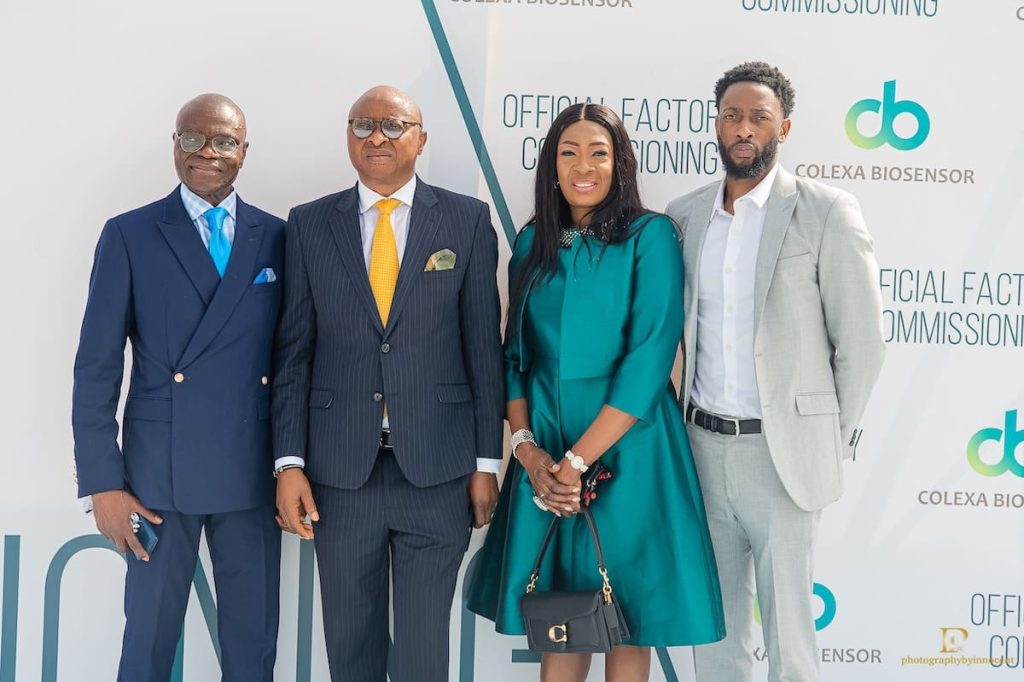
He sees the people work across the Codix group as an army. Anyone who sees money as anything but a result is in the wrong building. “Life has to be bigger than that.” An army, he says, will go to battle to protect people. Tolulope Ettu, who is sitting on the call with us, is proof. An MBA from the UK, she came home to build a brand communications department that Codix never had.
Professor Lere Baale, who has known him for years, describes the shift as a founder learning to work through other people rather than through himself.
puzzle box
For years, Sammy has been piecing together the Nigerian healthcare puzzle, but the box didn’t come with puzzle pieces; it came with a make-the-pieces-yourself kit. The factories run. But on things made outside Nigeria. Raw materials come from China, passing through India or South Korea to get to Nigeria, accumulating duties and freight along the way. By the time a pre-made cassette reaches the line, it’s lost six to twelve weeks of shelf life. The landing cost is far worse than a competitor’s before anyone has even done any work.
For years the arithmetic didn’t add up. A finished product imported from abroad attracted duty of nothing to five per cent. The equipment you needed to make that same product in Nigeria attracted twenty to thirty. The state was, in effect, paying manufacturers not to manufacture.
Executive orders have taken duty on manufacturing equipment and raw materials to zero, and Sammy credits the Minister of Health, Professor Pate, without hedging it. When Codix commissioned its plant, Pate left a Global Fund board meeting to come and open it.
Less expensive local labour offers no benefit, especially when the competitor is a colossus like Abbott. “For every one of you, there’s probably 100 of them.” When the WHO opened the door for technology transfer, Abbott, who by his account supplied almost 95 per cent of the continent’s tests, objected. Commercially, they had a point – why arm a rival? But it was the real objection underneath that got under Sammy’s skin, and it wasn’t about protecting market share at all. “They thought we didn’t have the brain, the capacity to pull this off.” It’s the only time during the whole interview you can hear the steel in his voice. “That sort of thing just angers me, because I am African. I lived in the UK, I contributed in the UK, I made things happen in the UK, as an individual. So why can I not do it back home?”
Since Codix Bio, several multinationals have begun packaging on the continent, and there are three more diagnostics factories going up in Nigeria alone. “If we hadn’t done it, they wouldn’t have done it.”
The next puzzle piece is an accessories plant, and following that, the raw materials themselves. Accessories first, because they are simple to make, because both factories need them, and because nobody in West Africa is making them. The raw materials themselves after that, from 2027.
He sets out to solve one problem and ends up solving twenty-three.
Ahmed Yakasai, who led the Pharmaceutical Society of Nigeria and has watched the industry for decades, puts the credit at about the same setting. “Sammy did not create these changes alone, but he has certainly been one of those who anticipated them, adapted early, and, in several respects, helped accelerate them.”
what the world wants
The argument he makes about test kits is the argument he makes about everything else. “Africa will never be left alone because of the mineral resources that are in Africa. So Africa has what the world wants.”
He calls them sellouts, the people who think first about what they personally stand to make from the lithium in their state. A stronger country gets invited in to mine it, and people are moved off the land. Afterwards, the money arrives to help the displaced. “Without necessarily people knowing that they are the ones responsible for the problems initially, originally.” The DRC is the example he returns to, because it never resolves.
What he wants is not the minerals kept at home. It is some of the processing done on the continent, with the work that comes with it, and an African Union serious enough to write that into the agreements before anyone buys. Which is the accessories plant argument, at continental scale.
“My experience in Africa is that we talk a lot, and we do very little,” he says. “So I’m just hoping that they can just do a little more than the little they were doing.” And then: “I pray that some of these things happen in my own lifetime.” Sammy is sixty.
The same argument runs at the scale of one town. He took his degree at Ogun State University in 1987. The rapid test factory is in Ogun State. The course in a subject nobody in West Africa was teaching went into the university that taught him. Oduwobi says he has gone back to do community development work alongside the pharmaceutical work, and that there is a trust fund now for academic scholarships and free health checks. A smaller homecoming than the one that usually makes it to the stories written about him.
not even halfway there
Sammy doesn’t speak about the cost in the past tense. It is real and in the present. Borrowing to finance raw materials at 30% requires collateral of 120 to 150 per cent of the sum, sometimes 170. Sammy came home from London without property in Nigeria to put against it. “For someone returning like me, coming back from abroad, where will I get collateral from?”
Public sector orders are almost always delayed. WHO prequalification, which donors demand before they buy, costs between 500,000 and 750,000 US dollars per product and takes about three years, because you cannot claim a two-year shelf life until you have two years of data proving it. “It’s madness,” he says. No African company has that money lying around. He talks about a current situation where all the money put aside from the WHO PQ process is being spent on paying salaries because it’s taking a while to get the malaria test kits approved by NAFDAC. “You know what you said, manufacturing is pretty brutal; trust me, I’m going through it right now.”

There is also a particular cruelty in going first. NAFDAC is benchmarking itself upward for diagnostics, toward the maturity level it has already reached for drugs, and Codix is the file it is learning on. “Us being the first one, we’re the guinea pig for that to happen.” The local process now resembles the WHO process closely enough that an approval which used to take three weeks takes considerably longer.
For a while, what helped maintain the pace was a large USAID order for rapid testing kits, 15 million of them, by his count, the guaranteed buyer his letter had gone in search of. Then along came Donald Trump.
Oduwobi, who has watched him for more than forty years, says the low points do reach him, harder than most people would guess, and that they do not last. Within hours or a couple of days, he has thrown himself into something new and moved onward.
Three weeks before we spoke, Sammy was in Mumbai, visiting a generics manufacturer. The research campus alone was five buildings, all multi-storied. In a single room, he clocked more analytical instruments than he had seen anywhere. The regulatory department alone housed five hundred. He came away with a sense of scale rather than achievement. “There’s a lot of work for us in Africa. Massive, massive work to do in Africa.” Roughly the answer he gave when asked about legacy. “We are not even halfway where we want to be.”
Before Merck, before Codix, Sammy was fully invested in a career in drug discovery. Thirty years later, the itch has returned. He wants Codix in drugs, not the generics. But the for Africa in Africa kind, that draws on ancient wisdom lost to time and sidelined by petrochemicals. “If I have money and I still have the grace of God, time and energy, that is something that I would like to start to explore.”
For now, he has his escape. Then it’s back to Nigeria for “the next battle”.
