

In 2004, a second-year engineering student volunteered to run an errand for his professor. His errand was to find industrial instruments used in meteorology. The university had a partnership with the city, and the equipment had to be sourced. Better than working on assignments, because “I’m also a lazy person.”
He wandered all over Istanbul looking in every shop he could find. They showed him everything they had – analogue hygrometers, temperature gauges, barometers for sailing, instruments in silver casings, the sort you decorate a hallway or a hotel with. None of it was what he needed. “I always say, no, no, no. I’m not talking about this.”
Until he came across a storefront with the words “Meteorological Station” written across it in large type. “Like in the movies,” he says, childlike glee splitting his face into a wide smile. “I had never seen someone doing marketing for meteorological stations because that’s not what people generally look for. If you have a measurement solution company, you can talk about temperature, humidity, even pressure. But you never say meteorological station.” Inside, they had nothing he needed. Fancy wristwatches. Barometer watches, the kind hikers wear. They had put up a sign for a market that did not yet exist. Then the man behind the counter turned the problem round: If Haşim knew who made the instruments he was looking for in America or Europe, he would import them on Haşim’s behalf. Haşim, all of twenty, found himself negotiating terms. “If you keep the price within our budget, and if you agree to a low margin on each item, I can also assist you in communicating with those people.” They gave him an email address to run it from. Within two months, he was on the payroll. He had that email address for six years.
a domain for someday
That same year, he heard a phrase he had never heard before: contamination control. The discipline that determines how clean a facility must be before you can manufacture medicines inside it, and how you prove it.
Curious, he looked up the rules. The international standard was less than five years old, adopted across Europe in the early 2000s and elsewhere from 2002. New enough, he says, that “most people knew the name but nothing else about them.”
He bought the domain name.
“The first thing I did before even learning the standard was to purchase iso14644.com. I said, maybe in the long run I will do something about it.”
Roughly sixteen years.
space cadet
Haşim, who has degrees in atmospheric sciences and meteorology, both from Istanbul Technical University, wanted to be an astronaut as a child. The programme he was interested in had space engineering, aeronautics and meteorological engineering under one roof. He meant to transfer, but didn’t because he found a job in his second year.
Makes you wonder how a man who has studied air at the scale of continents came to spend his life on air at the scale of a filling line. His response posits that there is no distance at all. He does not look at this as a digression from what he was qualified for because it is the same job: “Meteorological engineering is also about this measuring of technologies.”
In 2007, the importer he joined at twenty came across an American manufacturer named Lighthouse Worldwide Solutions that made airborne particle counters. By Haşim’s account, an upcoming regulatory change would make monitoring systems a requirement across sterile manufacturing, and it seemed logical to represent them. He represented them in Turkey for a couple of years. Then he left his job and started a company, which is still active, with iso14644.com inside it. The Lighthouse operation for Europe, the Middle East and Africa began in 2011, and he’s been running it ever since. The pieces started to fall into place. First broadly, then narrowing to a specific field, until his focus was taken up entirely by contamination control.
connecting the dots
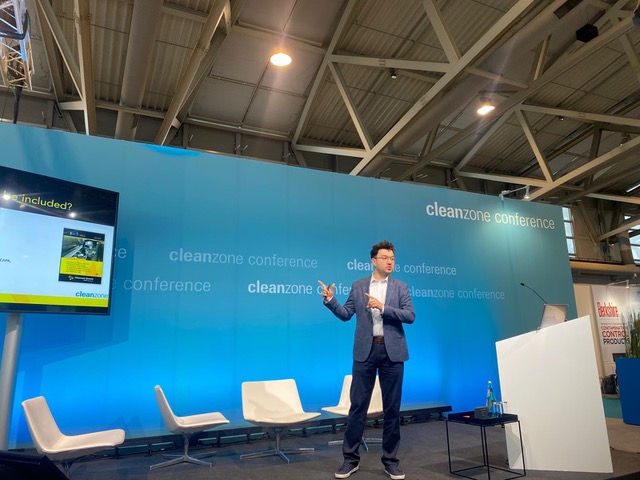
2015 was an interesting year. Türkiye had started to define the contours of its pharmaceutical industry. The Pharmaceutical Manufacturers Association of Turkey (IEIS) listed eighty-one licensed manufacturing plants, seventeen owned by multinationals, cumulatively employing roughly thirty-five thousand people. Abdi Ibrahim, the country’s largest drug maker, was breaking ground in June on AbdiBio, a hundred-million-dollar greenfield biosimilar facility with fill and finish. In December, the government published its 2016 action plan under the Structural Transformation Programme for healthcare industries, and item 46 prioritised licences for medicines made in Türkiye. Türkiye’s regulator, the Turkish Medicines and Medical Devices Agency, was three years into its application to join PIC/S. It would be admitted on 1 January 2018.
Türkiye already had a seat at the ISO Technical Committee 209, which writes the world’s cleanroom standards. But “at that time, there was no national society as such. So we said, why don’t we just initiate this?”
The Cleanroom Technologies Society of Türkiye was founded that October with thirty-six members in a technology park on the Asian side of Istanbul. “Our aim was to be close to the industry and especially the beneficiaries of cleanroom technologies so we can reach out to their employees and train them.”
It wasn’t as easy as he makes it sound. People who had heard about contamination control in Türkiye thought of it as an exclusively pharmaceutical industry thing, so he went to industries that didn’t know it was theirs too – aerospace, semiconductor, microelectronics. “We try to connect those dots and say that this contamination control is not limited to pharma applications.” Same standard, same measurement, with a different product on the bench.
He applied to the International Confederation of Contamination Control Societies (ICCCS) that same year, received approval by December, and became a member by the first of January. He says it was important to be part of an international organisation or you would be reduced to being a satellite. “Nobody abroad cares about a domestic position, and it would not carry at home either.” It helps that the increasing awareness “makes the pie bigger, and even when you have the same slice, the size gets bigger. That was the whole idea.”
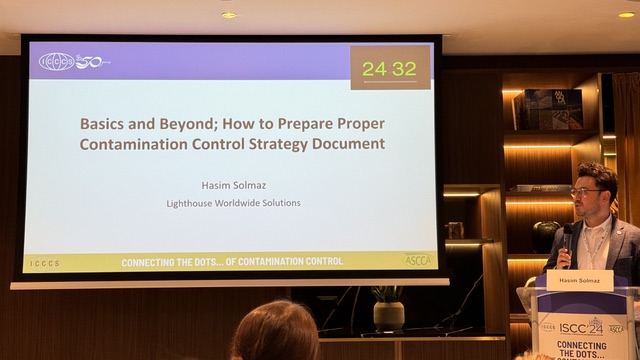
He chaired it for seven years before a colleague from his own board took over. By then, the society had trained and certified upwards of three thousand people, turning subject matter experts into trainers, and was accredited by CTCB-I to run hands-on testing and certifications. He is still on the board, and still teaches.
lighthouse keeper
Which raises the most obvious question, and he brings it up unprompted, while explaining why this couldn’t be a company initiative. “This is like being involved with international organisations without a corporate hat.” Using the Lighthouse platform would make this a commercial activity and be viewed with scepticism, if not outright suspicion.
His answer is to switch it around. “We try to understand the dynamics between the industry and map out all the needs first. Then after, anyone can solve this problem, including my company.” It is an arrangement that is nearly universal in standards work, expertise that sits with the suppliers.
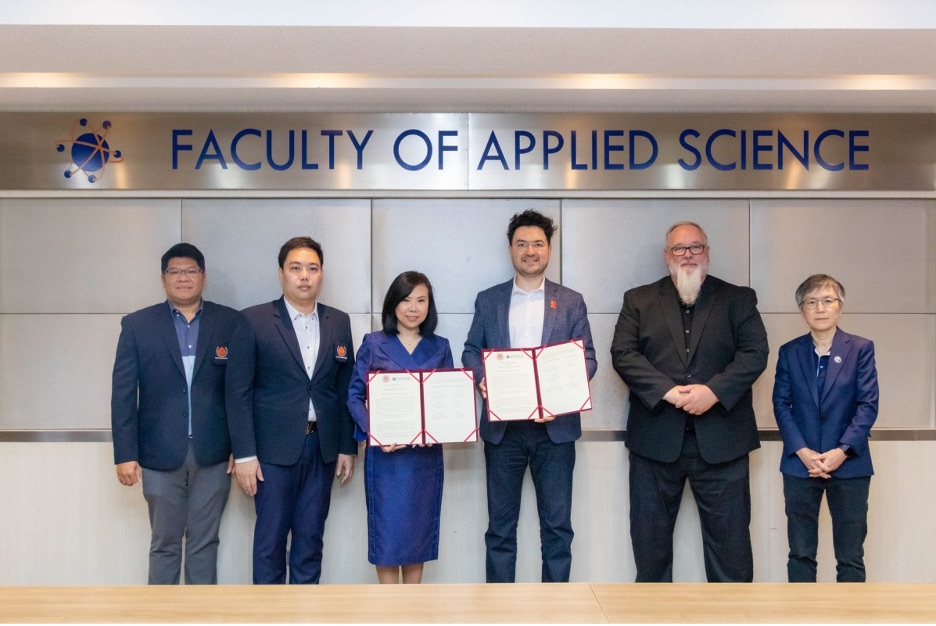
Namik Yener, who runs Yener & Yener, an engineering consultancy in Istanbul and sat on the first board of the society Haşim founded, first met Haşim in a similar setting. “He had requested an appointment with me to present a product, and I agreed. During the meeting, I realised that his personality was unique.” Before the meeting ended, Yener offered him a job. “Under normal circumstances, this wasn’t something I would do, but I knew I had encountered someone truly special.” Haşim turned the job down. “He declined my offer with great courtesy, yet that visit marked the beginning of our friendship.”
certified to teach
A little-known fact about Haşim is absent from his profile, conference bios, and media coverage, and it comes up unexpectedly in passing as an aside on the Turkish education system.
He went to a teachers’ high school.
When he was growing up, you could go to a teachers’ school and then spend two years interning at a college. When you were done, you were certified to teach. As an undergrad himself, he taught the practical elements of Fortran at his own university, while his professor taught theory. “I was responsible for the lab sessions, the hands-on elements of the syllabus.”
It’s a pattern that’s obvious up close. He is a teacher at heart.
sixteen years later
When travel stopped in 2020, Türkiye spent the pandemic building sterile capacity at speed and developing its own inactivated vaccine in twenty months. It was approved in December 2021. Now many people needed to learn how to qualify a room, but nobody could go to class.
Haşim brought iso14644.com out of hibernation. “During COVID, I had a chance to convert it to a training portal.” A gamified lesson plan with video, quizzes and at the end of it, a certificate with a traceable code. He brings gifts to whoever finishes first in a company cohort. It now replaces him in a room, and often when he has somewhere else to be, he’ll give it away as a gift. “I am not able to come, but you can have this access code.”
He says he’s been working to make the standard smaller for twenty years. “I generally spend the longest time to make things simplified. Like a pill for anyone.” He gives an example of the classification standard deck he built – the first one ran fifty pages. Now it’s twenty. He’s trying to fit the whole thing into an infographic, which he wants to add to his last slide as a handy reckoner. “If you feel like it’s too complicated, just get this page, print it out, put it in front of you; you have all the information you need.”
It’s a pattern that’s obvious even from a distance. He is a teacher at heart.
the woodworker and his coffee
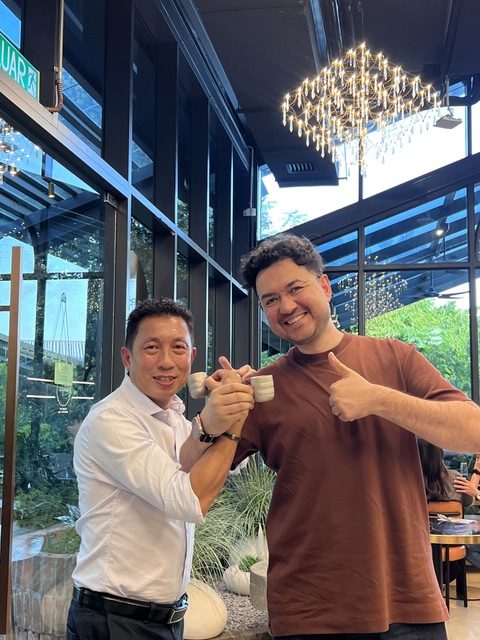
It shows up even in places that have nothing to do with his work. When he travelled, he went looking for speciality coffees to replace his local brew. When the pandemic broke his supply chain, he obtained a licence to import green beans, bringing them in from competitive auctions, and roasted them himself in hundred-gram batches. He set it up as a non-profit. “It’s a real micro operation just to share a good coffee with people”. In 2022, he was invited to be a juror at a Cup of Excellence in Guatemala. He likes light roasts, Nordic-style and is wholly unimpressed by trends: “Still, I’m chasing the best coffee. I couldn’t find it yet.”
He also has a workshop where he built a desk for his son using chestnut planks salvaged from an old house. A table made of soda bottle caps that his friend collected, set in resin. The why of it all is just as interesting: “It’s a great way to clear up the mind and generate some cool things.”
Yener, who has known him for years, says what people don’t see about Haşim is “his sensitive nature and his intense eagerness to learn.”
deterministic realist
Asked what he would say now to the boy who would be an astronaut, he is circumspect.
“There is a very small difference, a very narrow difference between being deterministic versus being realistic. So I was quite deterministic. That’s why I end up in this faculty. I am super happy with it as of today. But being realistic might bring me to another destination.” He paused at this point, ruefully adding, “I’d like to give another thought on this.”
Curiosity that arrives before a need presents itself will always need more than two hands to contain everything. Does he have the same twenty-four hours as everyone else? “That’s why I have to, like the coffee business, drop some of those things. Even if I don’t want to, I have to.”
Ask his mentor what Türkiye and the world would have lost if Haşim hadn’t done any of it, and Yener doesn’t talk about standards or societies. “People would never have realised the sheer mastery with which these incredibly complex issues were resolved and presented to them. It would only have come to light years later, through the research of some curious individual.”
Since May of last year, he has been vice president of innovation at Lighthouse, while still running the EMEA operation. And since 2022, he has been Secretary General, then Chairman, of the ICCCS, taking the chair early when his predecessor resigned mid-term. He’s also building a programme with CPhI. He is the keynote speaker at Pharmaconex’s Cleanroom Technology Conference in September 2026. A week a month in the US at Lighthouse HQ. He wants to find the time to adapt iso14644.com to other languages.
“I love to have more hours.”
