

It’s about that time of the year when the global pharma event calendar starts to look particularly packed. Informa Markets, one of the leading trade show organisers in the world, accounts for at least five of these global meetings. A potential buyer who wants to meet suppliers can go to Shanghai in June, Milan in October, Delhi in November and Riyadh in December – all four are CPHI events. Then there’s Pharmaconex, held every September at the Egypt International Exhibition Centre in New Cairo.
This is the thirteenth edition of Pharmaconex, running from 1-3 September. It is held in association with CPHI, under the aegis of the Ministry of Investment and Foreign Trade and the General Authority for Investment and Free Zones. The event is free to attend.
gateway to africa
Since the pandemic, every country across Africa and the Middle East with a dependent supply chain and less-than-ideal, or in some cases non-existent, manufacturing took firm steps to redress the status quo. It became imperative to build the infrastructure needed to manufacture essential medicines at home while reducing dependence on imported finished products.
A clear example is Egypt, with its large pharmaceutical manufacturing sector that produces most of the medicines it consumes domestically; yet it imports most of the ingredients needed to make them. Local API production covers a fraction of domestic demand. Speaking to Business Monthly in August 2026, Ali El-Ghamrawy, chairman of the Egyptian Drug Authority, says the country has 183 pharmaceutical factories, and the Authority has supported the localisation of 155 active ingredients used in 234 finished products between 2023 and 2025. But he says the hard part isn’t manufacturing the ingredients; it’s reaching the volume needed to compete with producers in India and China.
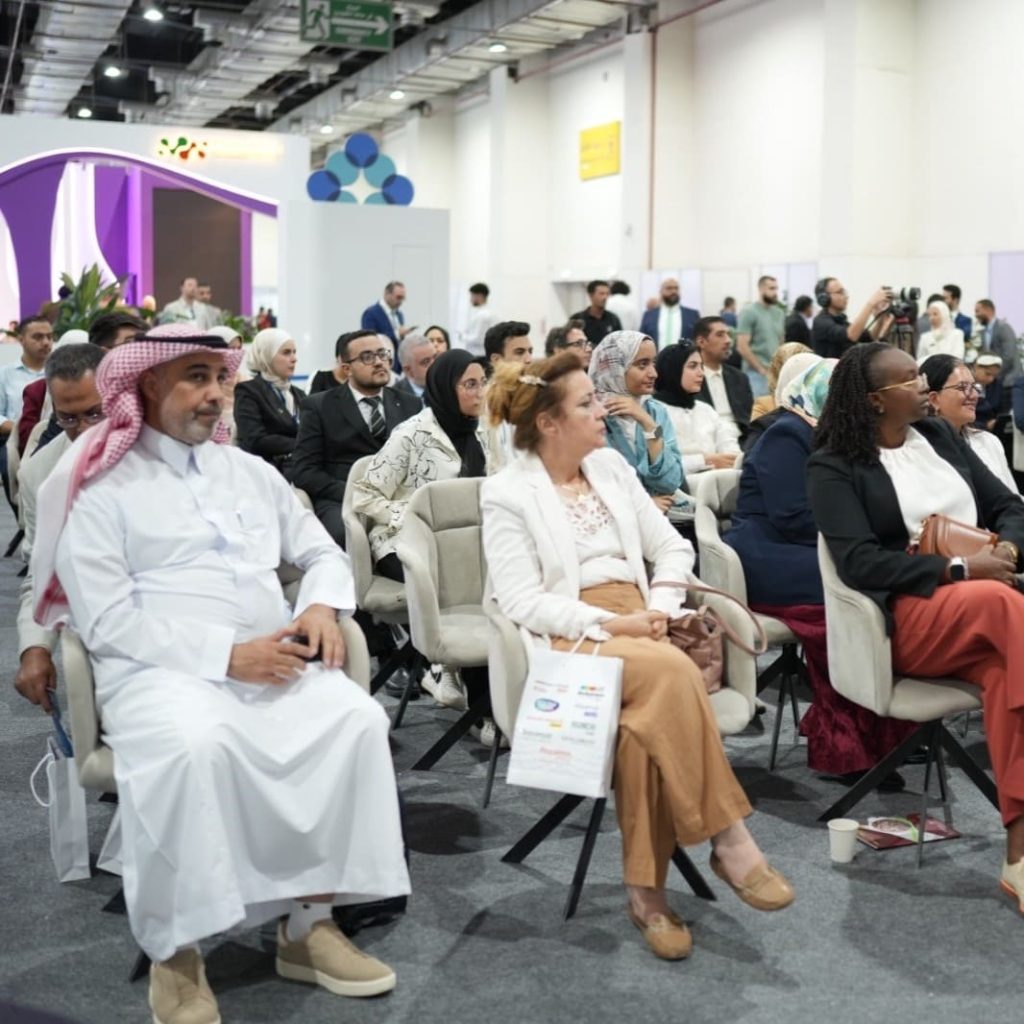
This contradiction runs through the heart of the self-sufficiency story in pretty much every country on the continent. To build a self-reliant manufacturing pathway that doesn’t depend on international supply chains, you still need these relationships to get there.
if you’re coming to buy
Pharmaconex brings these relationships under one roof.
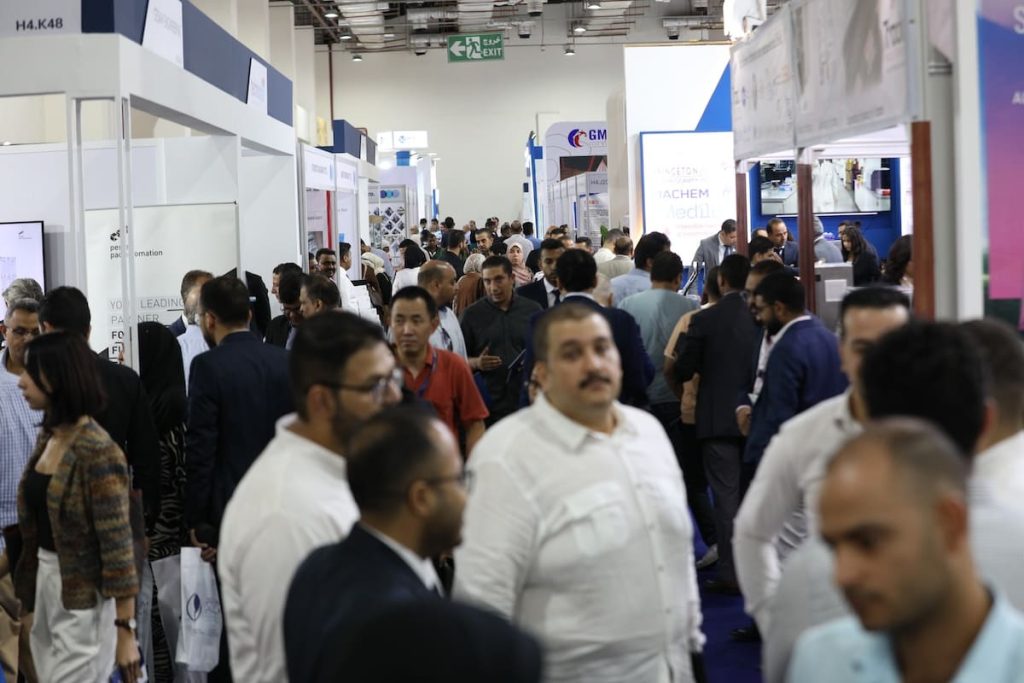
The 2026 exhibitor list has 360 participating companies across two halls, of which 136 are Egyptian, 113 Chinese, 91 Indian and smaller groups from Europe and across the Middle East. China and India are the world’s primary sources of pharmaceutical ingredients and affordable machinery.
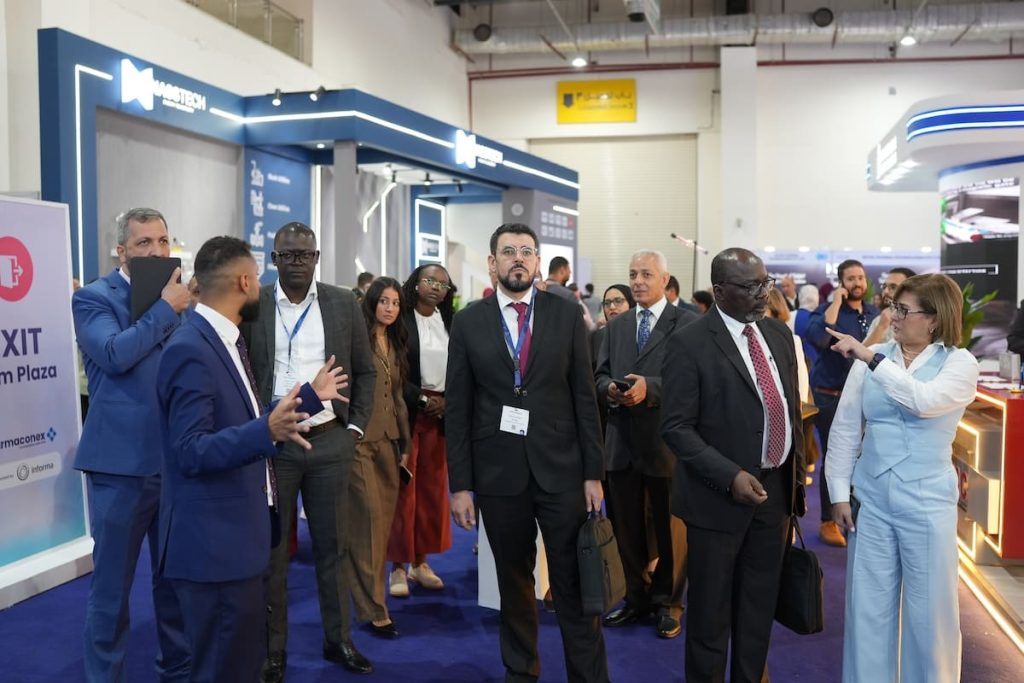
Egypt has one of the largest pharmaceutical manufacturing capacities in the region. Buyers from the continent and the Middle East are within reach of both.
Participating companies include manufacturers and suppliers of active ingredients, fine chemicals, biopharmaceuticals, laboratory equipment, cleanrooms, machinery and process technology, contract manufacturing, nutraceuticals and packaging. Among them are Zydus Lifescience and MSN Laboratories from India, and Zhejiang Huahai Pharmaceutical and Sinopharm Weiqida from China, all on the ingredients side. Colorcon and Gattefossé for the coatings and excipients. Tofflon and Shinva Medical Instruments bring sterile processing and sterilisation equipment; Fabtech Technologies builds cleanrooms and delivers turnkey projects; ZETA of Austria for bioprocess plant engineering; and Ansell and Elis for the garments and consumables used in a cleanroom.
On the Egyptian side, Eva Pharma, the country’s largest exporter and a double winner at the 2025 Pharmaconex awards; Nawah Scientific, which took home the exports award; Medical Packaging Co; and Pharma Egypt for Engineering. The three Egyptian state bodies also have a presence at the show: the Unified Procurement Authority, the Egyptian Drug Authority and the National Food Safety Authority. You can view the latest exhibitor list on the Pharmaconex website or in the app.
Pharmaconex also runs a program that reaches across the continent and extends into the Middle East. In 2025, more than 12,500 visitors attended, twelve per cent of them from outside Egypt, with Sudan and Nigeria among the largest sending countries alongside India, China, Saudi Arabia and the UAE. The event app has over 9000 users.
Pharmaconex runs a popular hosted buyer programme that brings in executives with purchase authority. In 2025, the matchmaking program facilitated more than 500 pre-arranged meetings with 110 exhibitors, alongside 300 VIP meetings.
if you’re coming to learn
The 2026 conference program focuses on the less visible side of manufacturing infrastructure: equipment qualification, ISO 14644, Annex 1, contamination control, GMP monitoring, technology transfer and digital batch records. Workshops include stability testing and digital transformation. The technical conference includes sessions on Morocco, Saudi Arabia, Iraq, Jordan, Libya and Nigeria. A women-in-pharma gathering brings together senior figures from industry, regulation and government; the 2025 edition drew more than 500 delegates and was led by Dr Hala Zayed, former Minister of Health and Population.
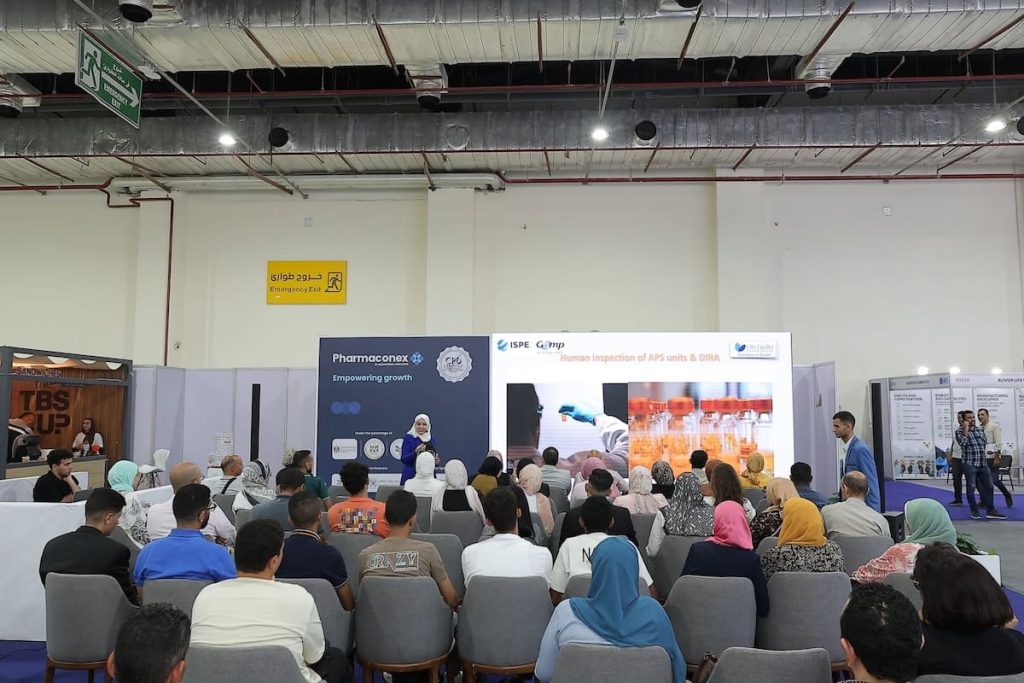
The technical conference is split across three stages, one per day. The regional stage covers investment and capital strategies alongside regulatory harmonisation and market access across North Africa and MENA; the tech stage is about biotech and AI-enabled production, and the green pharma stage centres on sustainable packaging and labelling.
Ahmed Helal of Jamjoom Pharma is chairing the 2026 cleanroom conference across both days, and opens with a keynote from Haşim Solmaz on ISO 14644 and what the standard asks of a facility. Haşim is chairman of the International Confederation of Contamination Control Societies, the global umbrella body whose work feeds ISO Technical Committee 209. Eva Shoukry follows on contamination control strategy under Annex 1, Mohamed Samy of Pharma Egypt for Engineering on equipment qualification, and Reham El Dahshan of Orchidia on cleanroom decarbonisation.
The regional stage on day one has Yara Al Mouti of Agon Pharmaceutical Consulting sitting across from Dr Abdulla Al Mesned, CEO of Bana Medical Company, on how Saudi Arabia and Jordan are collaborating on pharmaceutical innovation. Both bring the participation side of the localisation into focus; Bana is a supporting partner at the show, and Agon works across regulatory and project consulting in the region. The afternoon adds more country sessions led by Mansour Alajeemi of the Libyan health ministry on the registration pathway; Khalid Al Kinani of the University of Baghdad and the Iraqi Medicines Registration Committee on localisation in Iraq; Layla Sentissi of the Moroccan Federation of Pharmaceutical Industry and Innovation on Moroccan biotech; and Cyril Usifoh, immediate past president of the Pharmaceutical Society of Nigeria, on industrial networking across Africa.
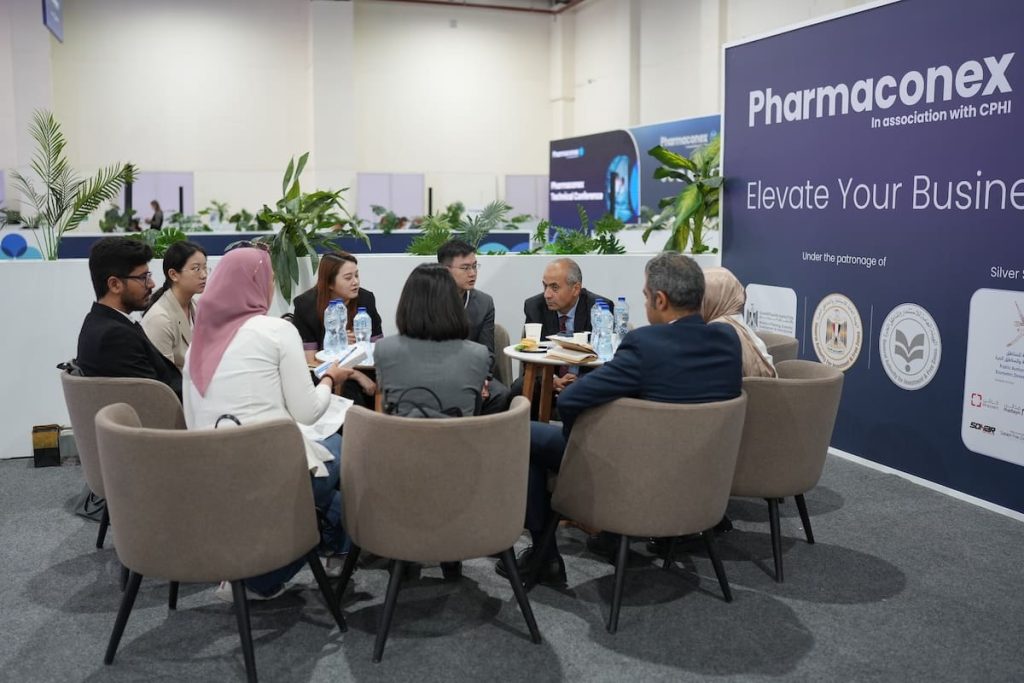
The conference has a practical function – the education program is certified by the CPD Certification Service. More than 3500 delegates attended the certified program in 2025. You can view the latest agenda on the Pharmaconex website or in the app.
In 2023, the show featured around 220 companies, about fifty of which were Egyptian. This year, of the 360 exhibitors, 136 are Egyptian. Local industry has nearly tripled its presence. This is an important sign of the region’s shift toward local ambitions. For now, the continent still needs to source much of what it needs from outside. Pharmaconex brings some of these companies into the same room as manufacturing, building Africa’s capability one facility at a time.
