In 2017, Shreya Khandekar walked into The Loft, a space Pune architect Khushru Irani created to spark creativity and discussion. She was there to listen to the speaker for the evening. That speaker was Anuj Kale.
Anuj says it was the first public talk he had ever given, and he was glad Khushru believed in what he was doing. “It’s one of those times where somebody believed in you.” The talk, he says, ran two hours, and is on video. “I had a ponytail and everything.” After, he and Shreya got to talking, “about our interest in everything. And then that is where we thought, let’s maybe work together.”
Shreya interned with a small architecture firm in Goa. The office was in Fontainhas, while the sites were all over the state. Then she met with an accident. “It was like a hard stop, because you cannot move around if you don’t have a bike.” Leewardists, the practice Anuj had started, was looking for writers. “I was basically one of the first employees,” she says. She has been a partner since 2021. Neither is a practising architect, and Leewardists isn’t an architecture firm.
drafting table x origin story
In October 2018, Vijay Garg, then president of the Council of Architecture, said in an interview that nearly 90 per cent of the buildings in India are made without an architect and that the country needed about two million architects but had fewer than 100,000 registered. Six months later, he put it at 105,000; 85,000 held valid licences and 65,000 were practising architects. The Council, he said, keeps no record of licences that go unused.
Anuj and Shreya are among those who stepped off.
Shreya’s internship in Goa had already settled the question for her. “It’s not for me,” she says. “I love design. I love the theories behind it.” Anuj comes from a family of architects, twelve or thirteen by his count, and holds a degree in architecture from Pune University and a master’s in urban design from CEPT, in Ahmedabad. He worked for about a year and a half at firms in Mumbai before he quit. His father, the first architect in the family, did not take it well. “It was like heartbreak for him that, oh, my son, I am an architect, my son became an architect, and he’s not doing architecture.”
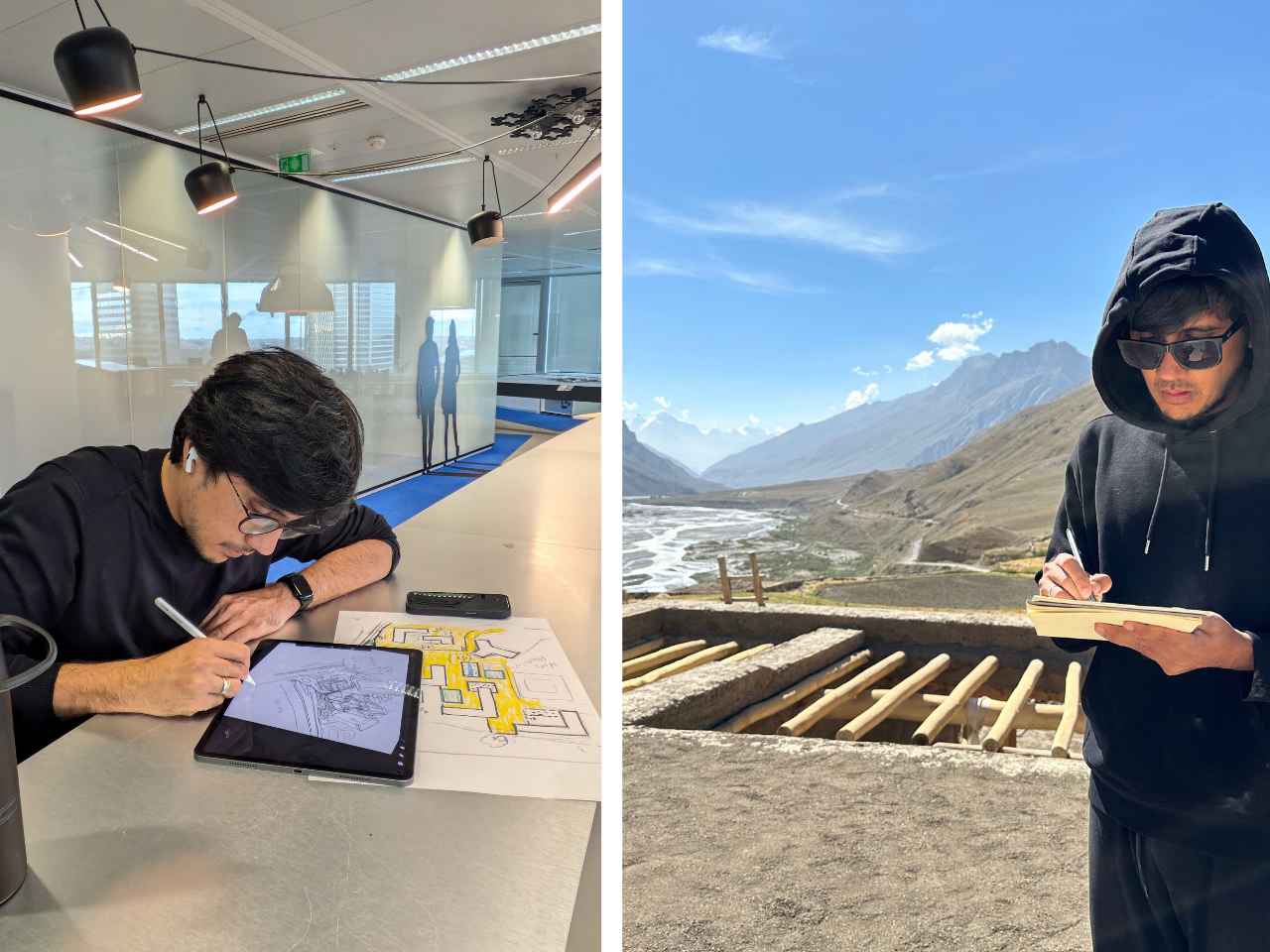
As a boy, Anuj says, he wanted to do what his father did. He was fascinated by the architectural drawings his father drew painstakingly by hand. He remembers his father at the drafting table, making perspective views of the buildings he designed, the kind a developer now commands from a 3-D program. “My dad was an expert in that.” It’s why he chose architecture, he says. Not because he wanted to be an architect. “I want to do what he is doing.” He says he was not a good student. “Me not understanding anything in school, comics were the only way to go around understanding the basic things about life.” The comics he remembers best came with the Batman animated series of the ’90s, which he watched and read. He liked the bright colours and scripts. “It followed the three-act structure, and it really helped me read more and understand more about writing also.” In architecture school, he drew buildings. He made no comics there, “because maybe it was too intense for me to explore that. Even if the building might not function properly, I started drawing them, and that was the only way to get through those five years.” His professors told him the drawing was good, but the building would not work. “In my five years of architecture, I did not learn architecture. I learned the illustration and visualisation part of it.” His master’s degree gave him something else. “The critical thinking part developed; I was empowered to do something which I feel comfortable with,” which the jobs in Mumbai did not use. “It was a very random thought, to leave the office, and just do something.” Later he gave the thought more shape. Early on, he had pictured himself at a large firm outside India, moving up its ladder, until that picture “began to feel more daunting than exciting.”
thumbnails x long scroll
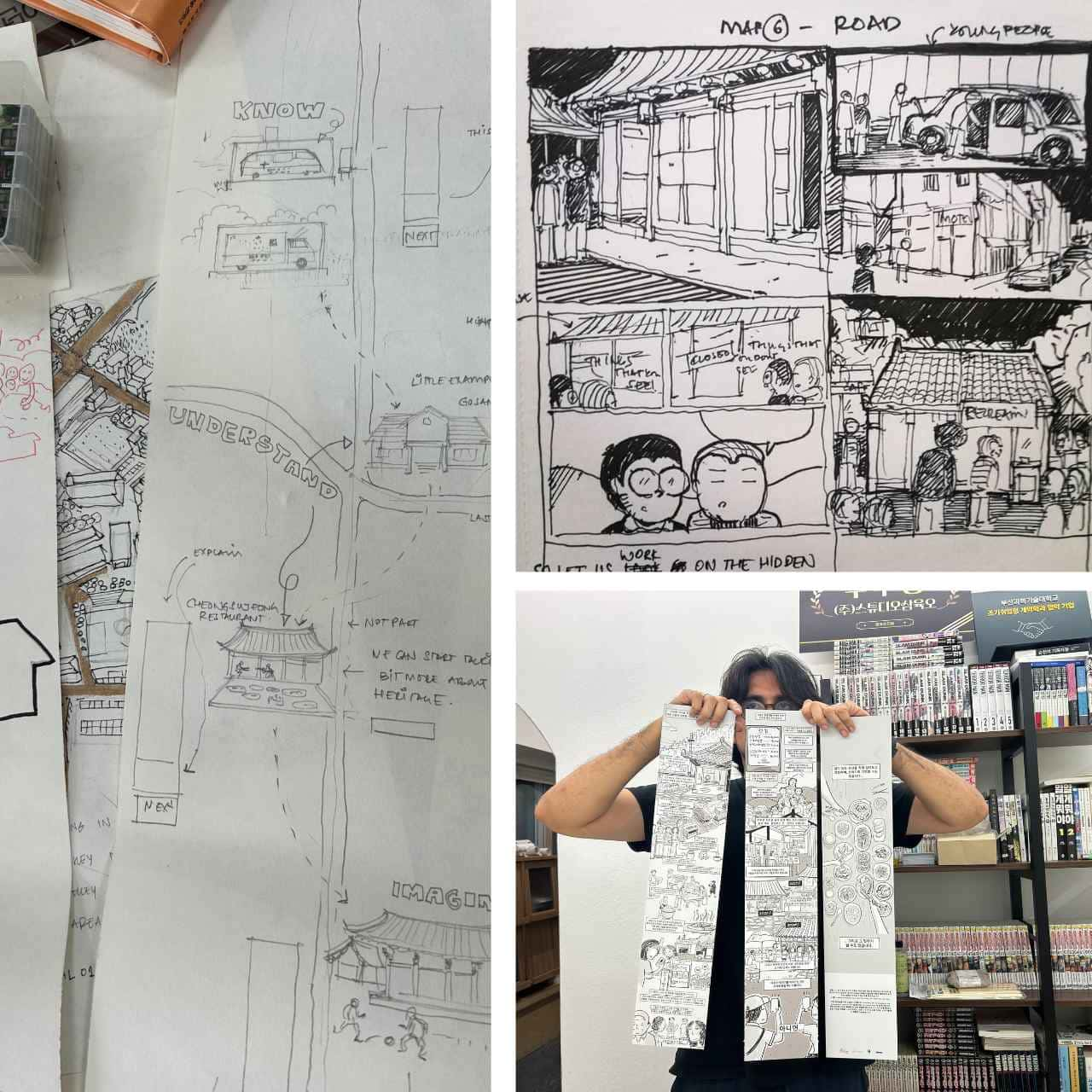
To keep himself going, he taught in Pune, where he tried comics to help students understand complex ideas, and took illustration jobs that were, he says, “beyond what I believed in, but it just gave me some money for that time.” Around then he found Scott Pilgrim vs the World, the movie first, then the comic books, as he was beginning to wonder whether he could do something with architecture and comics. His own work, he says, is mostly black and white, “similar to Scott Pilgrim.” A blog of scrolling comics about cities gave him somewhere to document his ideas but generated no income. In 2015, he started making short comics about architecture for Facebook and Instagram, memes really, because urban design through comics, he thought, “was too much for the Indian audience.” The first ones explained what an architect does, and he says the talk among the architects in his family could always be distilled to the same set of issues: “Client is not paying; nobody knows what design is; we have to really sell ourselves to tell them that this is why you should pay us.”
Shreya grew up in Kota, Rajasthan, the child of Marathi-speaking parents, though she is “terrible at Marathi, actually.” She read Tintin, Asterix and Archies, rented from a nook in the local bazaar, the issues never coming in order. In fifth standard, she wanted to be an animator and even had a portfolio ready. Her parents refused to let her pursue it until she finished her boards. “And so then I have no memory of that beyond that point.” In Kota, she says, there were no arts on offer, and engineering would have been the logical choice. “Somehow it just occurred to me that I want to do architecture.” There were no architects in her family, and to her it felt like a secret society. “Why is it such a closed profession? People don’t know about us. People don’t know what we do.” She’s given much thought to who gets in. “Who gets to study and then also practise is a very different question.” After college, she tried her hand at writing for architecture magazines, where she says the expectation is that “the word sustainability should come like fifteen times in a five-hundred-word article.”
desire lines x crossover
I found Leewardists much the same way Anuj says most people do, through a comic: a friend who’s heard me rant once too often about the joke that is urban planning shared one about footpaths, and I reshared it to Linchpin’s Instagram. We haven’t had a car since Uber came to Mumbai in 2014, and when my family moved to Goa in 2021, we chose Panjim as the one place we could walk. Friends gave us six car-less months. We still haven’t caved. It works, but it also doesn’t. Off the arterial road, most streets have no walkable footpaths. You have to walk with all your senses on alert for broken or missing pavers, parked cars and bikes, animal waste, metal debris poking out from past iterations, drunk tourists, joyriders; we have it all – a veritable Takeshi’s Castle.
Engaging with the comic about footpaths, I became one more link in a chain Anuj has pondered a great deal. “It’s not about getting viral. It’s about making content that is fit for that platform so people share and share and share and eventually it reaches.” The footpath comic belongs to a group of subjects Anuj and Shreya return to often: who gets to move through a city and who is let in.
There are two pages. Leewardists, the older one, is popular with architects, but Urbanist Comix, which they started in 2024, focuses on cities and the people in them. “People for the longest time did not know it was the same people, which was great.” Anuj calls the pages “a portfolio to attract people.” To Shreya, they are where the whole team tries things out, because the stakes are low.
The comics, though, are just the entry point.
bylaws x speech balloons
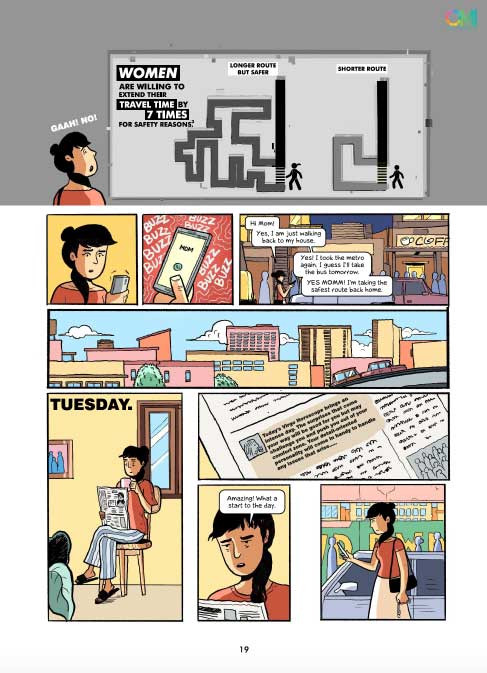
Anuj says this is how most of the work arrives. Somewhere along the chain, a stranger at an institution, an NGO, or a corporation will see the work and message them, saying they’d like to talk about it. Like we did. “We are a communication design studio,” Anuj says, one that untangles complex issues in the built environment. Explainers for the folks who shape and run our cities.
We asked for examples – Shreya talked of public toilets, every Indian woman’s curse; equal parts desperation and revulsion, unless she can buy her way out of it. As Shreya says, she can. If she needs a loo in the city, she buys something at a cafe and uses theirs. Plenty of women can’t. Guidelines exist for designing a public toilet. “But then the question is, does a ULB officer actually know what it means?” The ULB is the urban local body, the municipality that has to build it. How accessible is it? Is there a ramp? How steep is its slope? Is there enough light for the elderly to find the door? Is the floor dry? “Of course, our job cannot solve that, but it can at least bring that empathy, which is somewhere missing.” And it isn’t only officers. Anyone who has never had to use a public toilet might not know that five rupees is a lot of money to some people; that the women’s side costs more, while the men’s is sometimes free; that some charge by time, past five minutes, when a woman in a sari or carrying a child might need longer. Shreya found out for herself on Carter Road in Bandra, when she and a friend argued their way into a gymkhana’s loo and were sent to the service washroom. “Why is the service washroom not the same as the washrooms that you have inside for your members?”
Anuj spoke of water: “If the government is giving regulations, they are not hindrances.” Two development authorities, Chennai’s CMDA and Varanasi’s VDA, commissioned comics to explain building regulations to builders and flat owners. A city approves, say, sixteen flats on a plot; a builder finds a loophole and puts up eighteen; the water department supplies water for sixteen, and come summer the residents buy tanker water to make up the deficit. The comics become an explainer for potential owners – so they know what to look for in the paperwork before buying a home, because they’re the ones who will pay for tanker water, possibly deal with maintenance problems, and face greater risk in extreme weather.
Neither will claim that their comics are effecting change. Shreya says it’s a far stretch “to say that our work can change the world. I hope it can. I really do.” From where I sit, though, the cascade effect of work like theirs and that of others like them who close the empathy gap in urban planning is hard to miss.
tolerance x detail
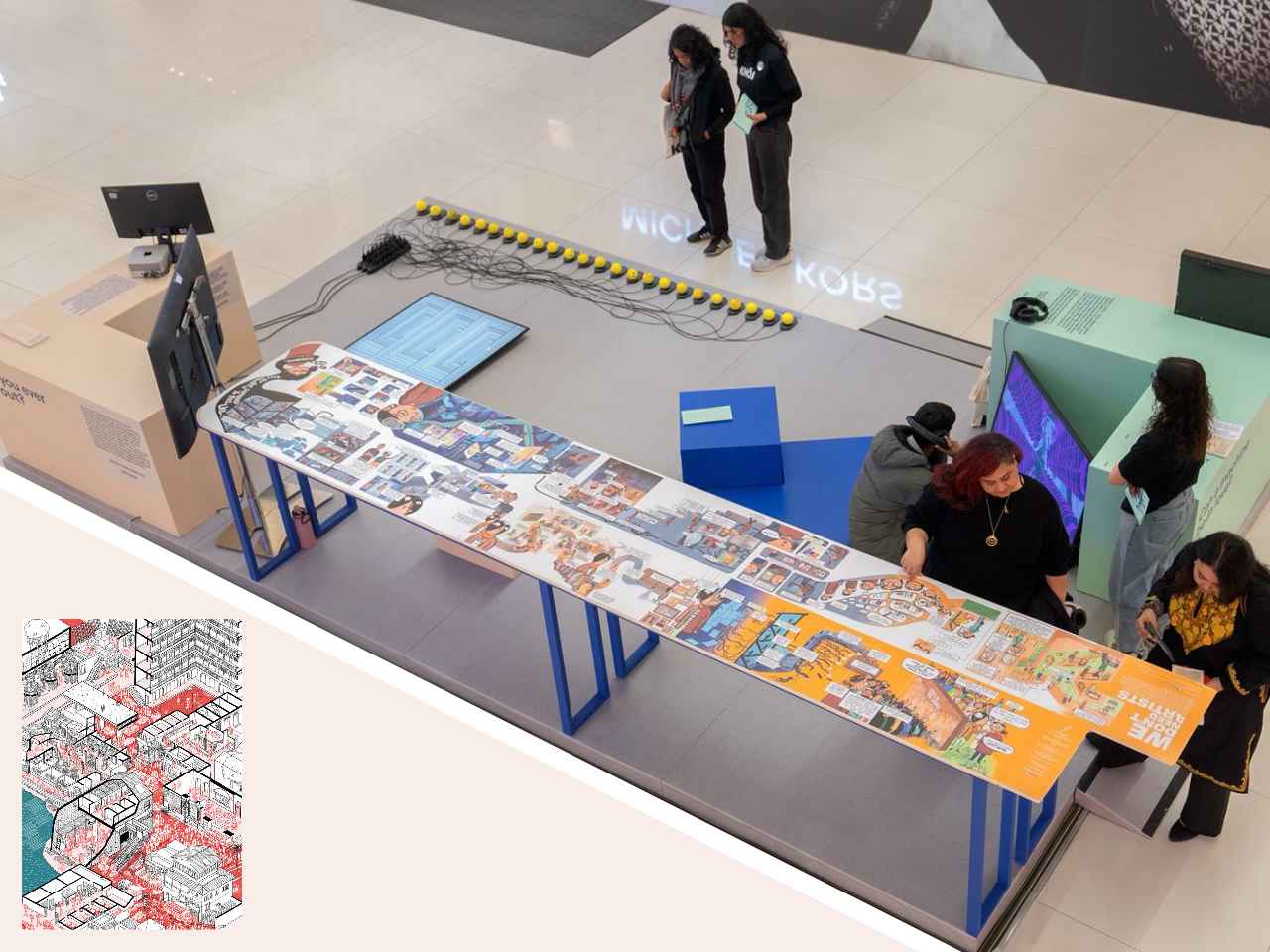
Kanika Bansal, an architect and urban planner, knew their work first as a reader. Teaching at the M S Ramaiah Institute of Technology in Bengaluru, she was looking for ways to introduce “more relatable stuff” to her students. In a talk on career paths following an architecture degree, Leewardists was one of her examples. She first commissioned work soon after joining a think tank that advises the government. “It was the National Institute of Urban Affairs.” The programme wanted to show what COVID restrictions had done to disabled people in cities never designed for them. “I just kind of wrote to him, and he wrote me back immediately.” What had reached the institute, Anuj says, was a comic they had made early in the pandemic: Do we need an architect after COVID-19? It was the studio’s first paid work outside architecture, and they underquoted because “we really wanted to work with them.”
Kanika calls herself “a very hard taskmaster,” and what she remembers is accuracy. “I never have to tell them twice an architecture detail.” Comics bend things, she knows. “But because we were working on a very sensitive topic, because a ramp has to be like a ramp. It cannot be anywhere, any way – any other way.” Once she asked for every challenge and every solution her institute had worked on, drawn as a single city. They delivered in fifteen days, in time for an international forum. Another time she flagged a colour an autistic reader might struggle with, and they redid the entire palette and the artwork with it. She still sees the comics on social media, and they’re a bookmark for the next time she’s making a policy or working on a project: “I need to keep this also in mind.” She’s known them for seven years, she says, and met them in person once.
Accuracy for Shreya also means not leaving things out. Asked whether caste shows up in their work, she says yes and points to Paryavaran Mitra, the first in a sanitation series they’re making for the institute, on sanitation workers in Uttarakhand. “It was a non-negotiable.”
crit x gutter
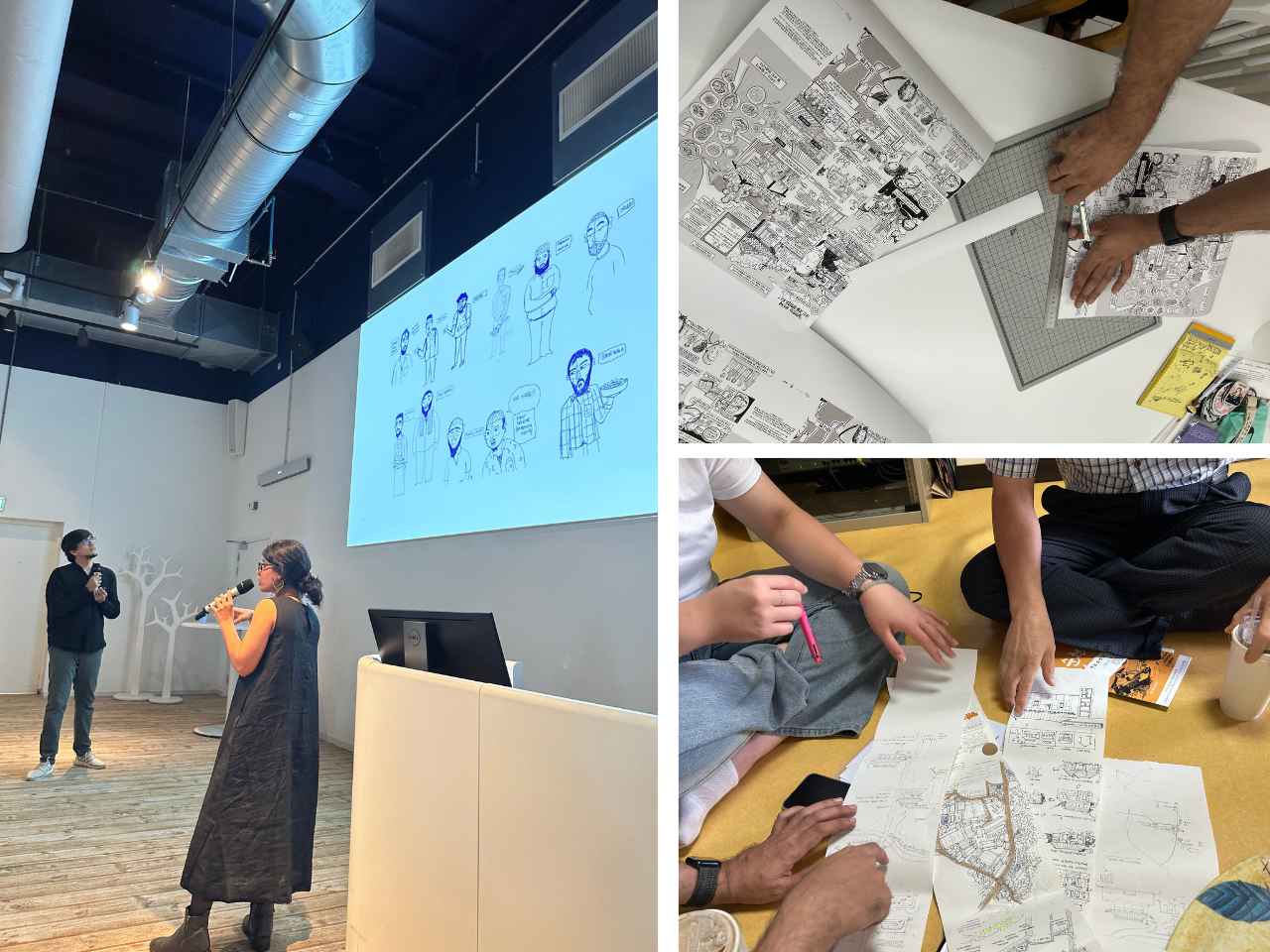
The studio has rules about how a job begins. Before they send a quote, they will have two meetings with the client, “like a therapy session,” because most clients arrive with data but no idea what it might evolve into. When a script is ready, they read it aloud, the way, Anuj says, Ashutosh Gowariker narrated Lagaan to Aamir Khan over two, three hours. “It has to be narrated like a movie.”
The paperwork comes from an early mistake, one Anuj owns. Ola, the ride-hailing company, had surveyed what women face while travelling in Indian cities and wanted the findings mapped into something people would read. The story took forever to approve. Shreya offered to take the rest; Anuj refused, sure he could close it. He sped up the storyboard and set out to finish within a month. The client sent a long email about how disappointed they were with the illustration. “It was completely my mistake. If it took time for the story to get approved, which means that’s a good sign, then we should spend an equal amount of time on the art side of it.” They redid the art. After that, Shreya took over the proposals, copyright, IP terms and all. For some clients it’s a long document. “We are the artists”, Anuj says, “it has to safeguard us, first.”
Shreya describes their partnership as a relay, “I figure some part of it, he figures some part of it.” Anuj describes two heads, finance and marketing on his side, art on hers. “It’s a matter of slow and fast. I would like to work fast.” Shreya gets the time; “you cannot tell an artist that this is a deadline.” It is an arrangement, he says they arrived at “through disagreements and through failures.” And now, he says, “we will not question each other.” That disagreement has to end at some point so the work can begin.
Shreya’s version has more friction, and she gives an example from minutes before our call. They’re making a comic about women and architecture, and one spread shows the protagonist, an architect, shut out of the process. Anuj had storyboarded it in the abstract. Shreya wanted it real: the kitchen, where women in this context spend the most time, and where half the things are not built to her height or eye level. Would that be too specific, too realistic? She chuckles when we ask who won. That, she says, is how it goes “every step of the way,” because “we don’t have a set process.”
Anjali Parekh, an architect in Nashik, runs Parekh Farm with Sumit. Shreya and Anuj call it “our occasional workstation.” Over the years, she says, she noticed that “the more interesting questions and points of view were raised by one particular colleague.” That’s when she realised that Leewardists had “become plural”. The two, she says, come to work in the farm’s Garden House and give her a ringside seat to many an intense debate, one that stops only for tea. Her impression is that “the majority of their hours of work are consigned to the dustbin, and only a precious few drops enter the public realm.”
jury x splash
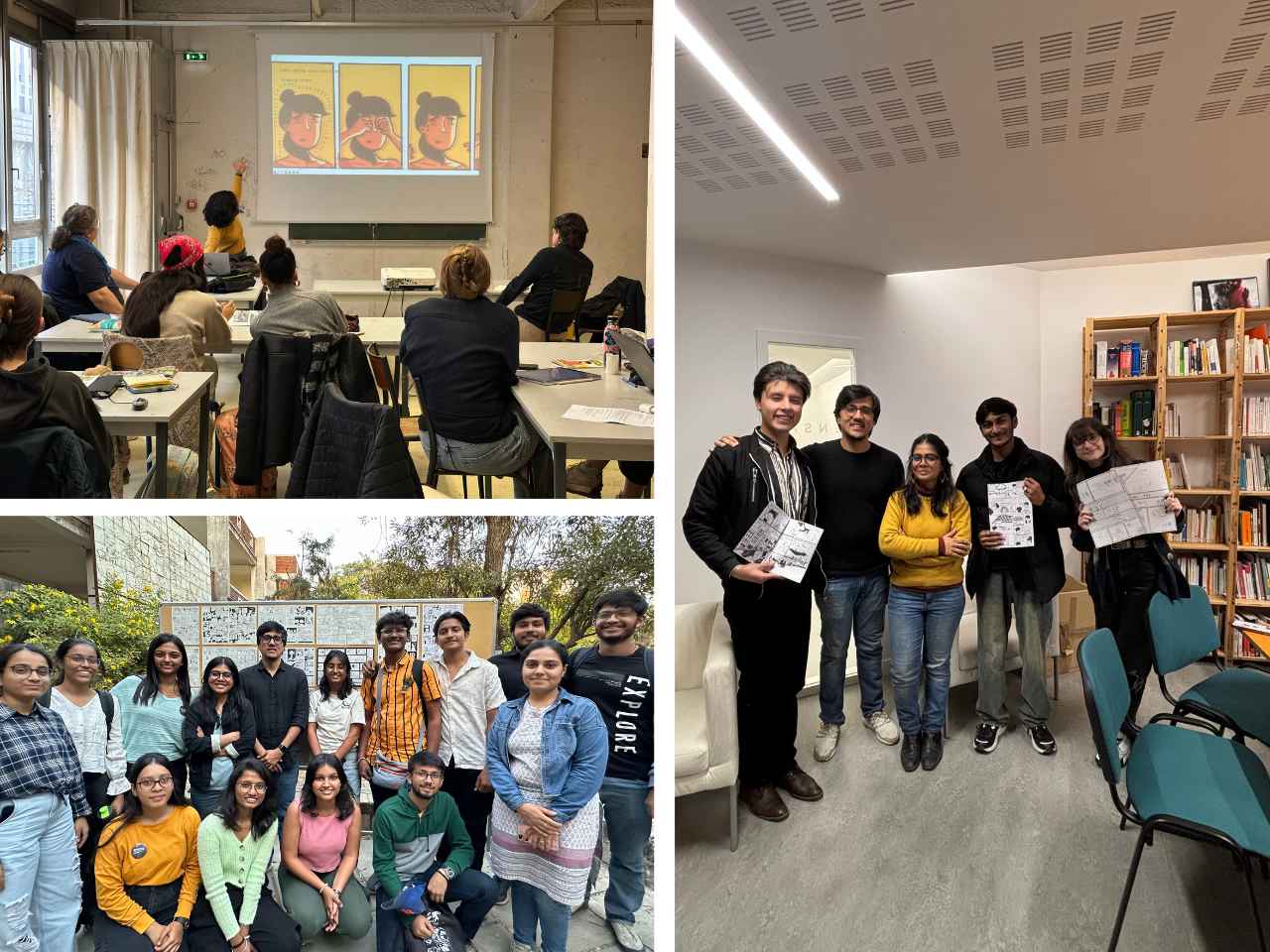
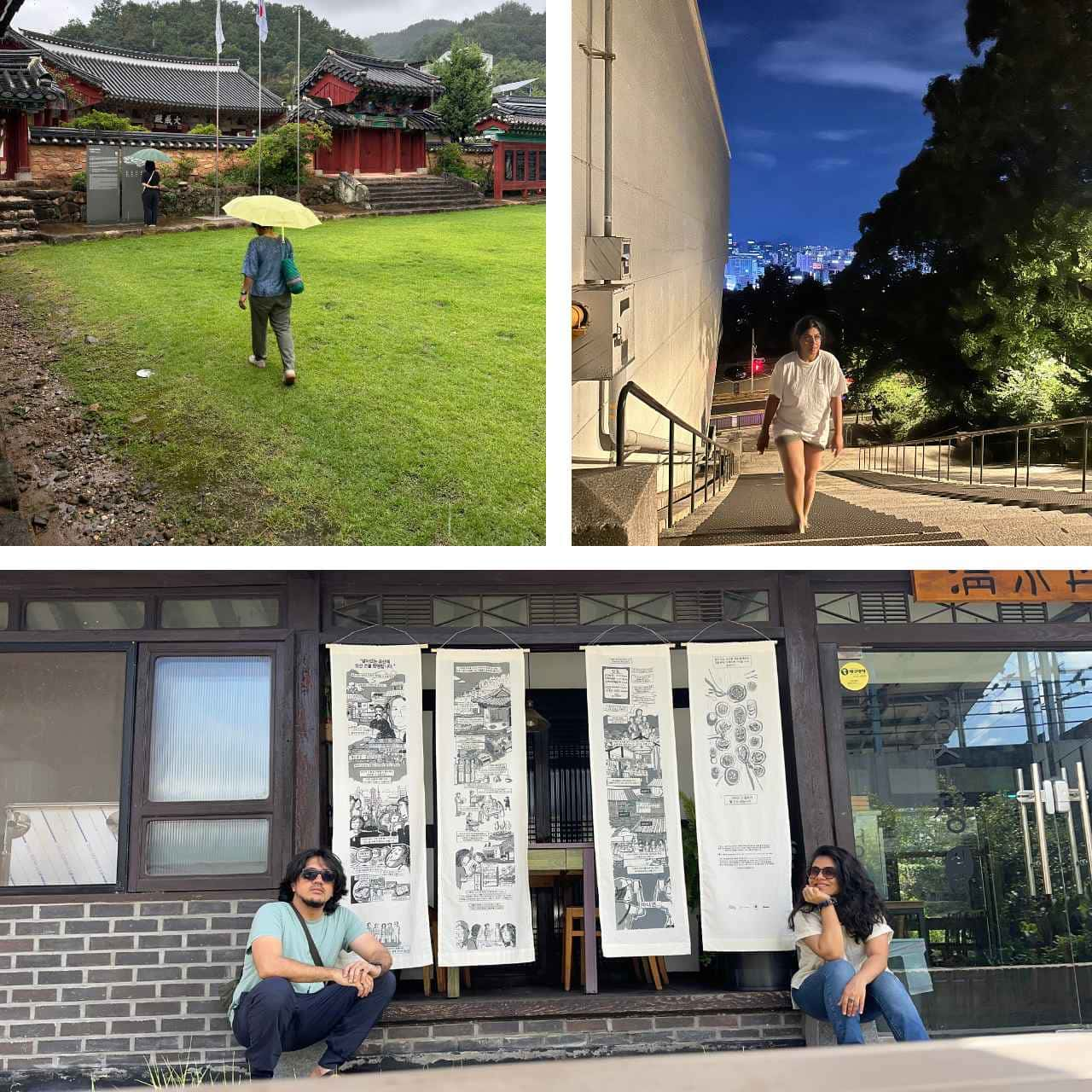
A lot of the work is teaching. Ritu Deshmukh, then principal of an architecture school in Navi Mumbai, gave them ten days with her students, while most colleges allow a day or two. Shreya says that’s where they found their way of teaching. In Paris, architecture students spent a semester documenting an immigrant district and the network of NGOs working in it. The outcome was “ten comics about ten different NGOs that are in your neighbourhood.” The comics were on display for a month.
Both were asked separately who their biggest ally was, and both named Ritu. Anuj tells of a project in Spiti, with a few days in Chandigarh on the way back. Instead of following Google Maps, they walked from park to market to park, and he pitched her on mapping those routes. “So she extended our stay. She said, okay, what funding do you need for this?” Shreya says Ritu backs the idea but doesn’t say how to do it.
as-built x sequel
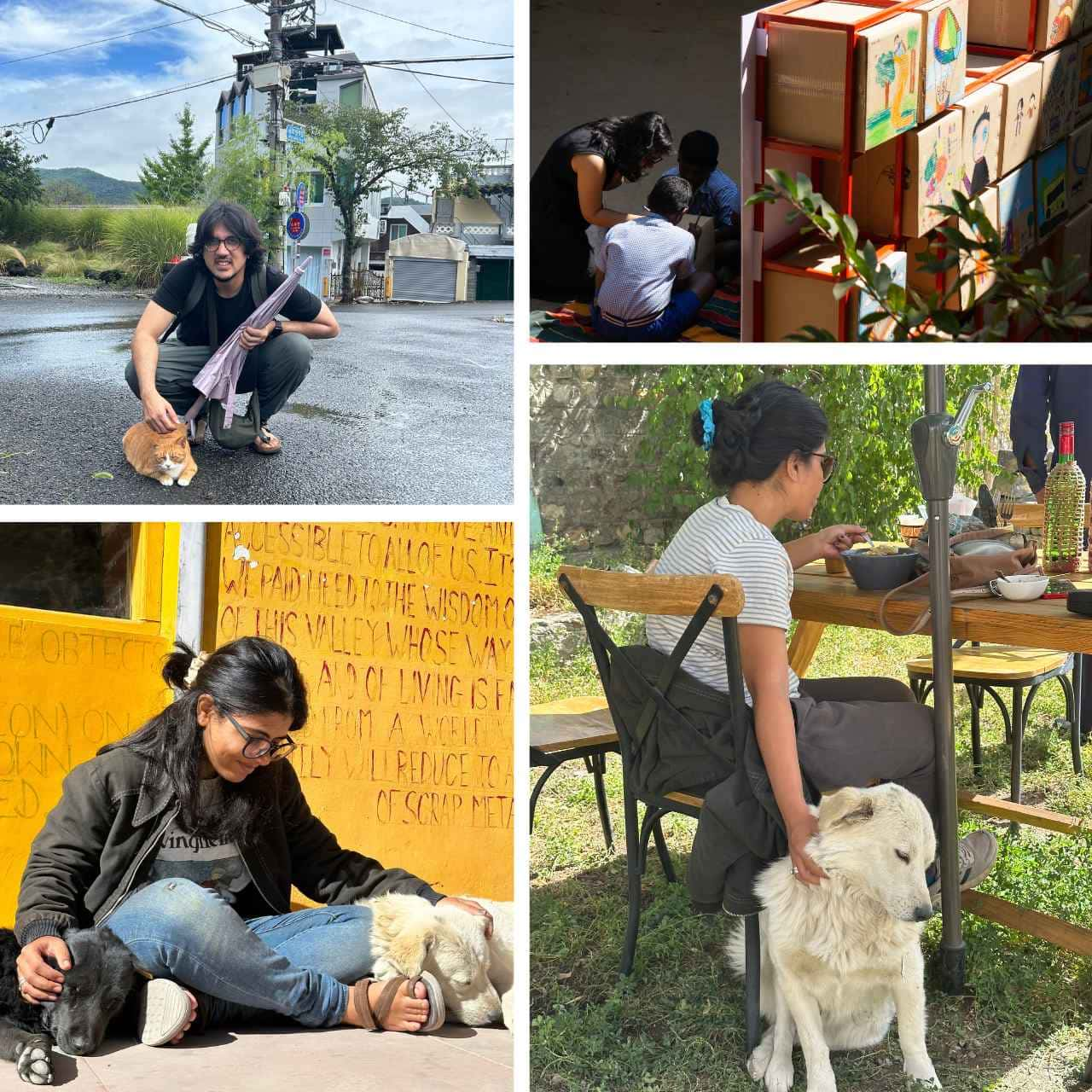
They actively engage students in Indian colleges. It pays almost nothing and they go anyway. Many students, Anuj says, “don’t even know why they joined architecture.” He is realistic about the odds: “even one out of sixty is a win.” Shreya says something similar. One Christmas, they made a comic about Santa as a gig worker, out delivering when everyone else was at home; it didn’t land. Some time later, a student who came to interview them at a children’s art festival in Bengaluru told them she loved the comic. “One person got it. That’s a win.”
Kanika, who is yet to attend one of their workshops, puts it another way: “They don’t reserve that art form to themselves, but they are kind of also teaching it to young professionals.”
In the early years, a lot of the comics were about the misery of being an architecture student: the juries, the nights without sleep, the feedback that changes every time you show your work. The studio has kept screenshots of the messages that came back. Anuj remembers one in particular. “Looking at your comics makes me feel that I am not the only one suffering in this world.” Some of those readers, he thinks, stayed in architecture because of it. Others understood from the comics that it wasn’t for them and left, which he doesn’t count as a loss. Some followed the comics from first year to fifth and then signed up for the studio’s courses. “No amount of money can give me that.”
Teaching is also Anuj’s road not taken. He’d taught for two years in his mid-twenties; the students loved it, but he suffered from too much bureaucracy. “There’s hardly anything about teaching. It’s about everything else apart from teaching.”
But if he couldn’t do what he does now, he’d go back to teaching, “because I really, really like it.” Then he takes it back. “But then the answer is no.” He’s made room for it inside the studio instead. “It’s something I’ve been fortunate to make room for within our work.”
Explaining the work is another matter. “We are architects by degree. So we just say we’re architects and we sometimes close the discussion.” Strangers ask “very whimsical questions. What is this? Why do you do this? Will this give you money?” Relatives are harder. “They know that we’re not doing architecture, so we cannot tell them that. They’d just dig harder.” His parents no longer ask. “My father does not know what I do, so I cannot call him an ally, or my mother also. They are just happy.”
He says he feels privileged to do something like this in India. That too in a small city. Even his father has come around, he says, albeit slowly. It was his father, Anuj says, who told him at graduation to do something that made him “excited to get up,” which makes him “the culprit who has made me like this.” Anuj once told him he was, in the end, doing what his father did. “And he is like, whatever, you still are not practising architecture.”
Shreya first said comics, then took her time answering what she’d do if not this. She thought about it for weeks. Not architectural practice. Perhaps “some combination of writing, drawing and teaching, or perhaps urban studies, perhaps with intersections with gender, which I still intend to pursue.”
And one day, she says, a bookstore and library that occasionally serves coffee. “Open to everyone, especially dogs, cats and children. Hopefully, I’d get to design it myself – with a little help, if needed, from my architect friends, who should be well established by then and busy.”