


The calls seemed endless. 10 days. 20. Each call a new script. He was under digital arrest. A package with a kilo of cocaine. A case filed for fraud. The numbers kept changing. Then his parents started getting the same calls.
Siddharth Shankar knew these were scams. What took him aback was that these strangers could find him, and then his parents, number after number. “I knew that this fraud was going on, but I wanted to know how it was happening.”
He spent ₹5,000 on a digital exposure report to find out. It ran to 107 pages, built from an email address he had used since 2012. “Anybody can connect the dots and figure out who I am, where I live, what my profile IDs are, where am I registered, and this is all public knowledge.”
If he could buy the service in bulk, he reasoned, he could offer it to other people for ₹500. “So I thought, okay. This is something which people like me might want to know.”
3000 rupees
Siddharth is a wearer of many hats, and he’s been selling something under nearly all of them. He has a penchant for jumping headfirst into fields he knows nothing about. It started with the appeal of five-star hospitality: marble floors, ornate chandeliers. In 2002, he enrolled at the Institute of Hotel Management in Bhopal. His training at the Taj Bengal in Calcutta changed his mind about a career in hospitality real quick. After graduating, he would earn roughly ₹3000 in a city where he’d have to pay rent and wait eight years to reach a manager’s position. “I realised that being on the other side of the table is better in a 5-star.”
A friend suggested call centres, which paid four or five times as much. Before long, he was selling holiday packages to British customers at a company that paid incentives on how high he could push the price. He describes having to make a 100 product sound worth 500. “Then there’s 400 rupees of lies you have to put in.” He puts the job at “99 per cent deceit, 1% honesty.” It weighed heavily on him. “I’m lying eight hours a day. And somewhere, a voice from within said, ‘That’s enough, brother'”
A recruitment consultant put him in touch with Karina (yes, our Karina, from a previous life; the world is small, etc.), who interviewed him in a Gurgaon hotel lobby for a job in event production. He calls it a “vibe check”. He knew nothing about events. “I learned event management out of the blue.”
The jobs that followed went the same way. A few months selling hair for bald heads with no idea about hair either. “But I said okay, if we go in, we’ll understand that four things are the same. There is no fifth element literally.” The four he wrote later: identify the product, identify the market, build the infrastructure, build a team to execute. By 2015, Mumbai began to wear him down, and he wanted to go home to Gwalior. Start a business. It was the only alternative for him in Gwalior, based on his experience. eCommerce was the new thing.
empty walls
He started selling printed paintings and posters on canvas with a friend, and from 2017 carried on alone as Tamatina. He doesn’t pretend it was about art. “No love for art of any sort.” What he wanted was to stay home. “From Gwalior, I can serve big cities. I don’t have to be in a big city to be established.” His dad asked him several times for at least one painting for their own empty walls. “I kept saying, I’ll do it. Nine years passed. That painting never hung in my drawing room.”
What he did care about was what reached the customer. Quality comes first, he says, and honesty second. “If I’m the person on the receiving end, am I happy with this? If yes, go for it. If no, stop it.” A dot on a canvas meant a reprint because, if he could see it, the buyer could too. “Take that loss, take that hit, but don’t ruin your brand.”
Nitin Kapoor, who first met Siddharth in college in 2002, has watched him hold that line since. If a deal meant compromising on quality or his principles, Nitin says “he would rather walk away from the business than compromise those standards.”
Tamatina did very well during the first wave of COVID when folks were investing in livening up the homes they found themselves stuck in. Competition was virtually nonexistent; big city players had to close their production units because staff were unavailable. In small towns like Gwalior, lower population density made lockdowns easier to navigate. Siddharth’s production and packaging team, who were all local, made it work. He remembers tasting real financial success that year.
Competition intensified in late 2024, early 2025, around the same time his ageing printer needed replacing, a significant investment. “Don’t do something which anybody else can easily replicate. Otherwise you will get replaced sooner or later.” He wound up operations in October 2025, and is trying to sell the brand.
polly wants a pigeon pea
In 2021, Siddharth bought a five-acre parcel of farmland in Gwalior to grow organic produce. There were no farmers in his family or friend circle. He had no agricultural background whatsoever. “I had no idea what I’m getting into. I thought farming is, well, we have something very simple. But there are a million things between that.” He approached it the same way he goes at everything he does. “You get in it, you learn the fundamentals. You have some good people you can ask questions from.”
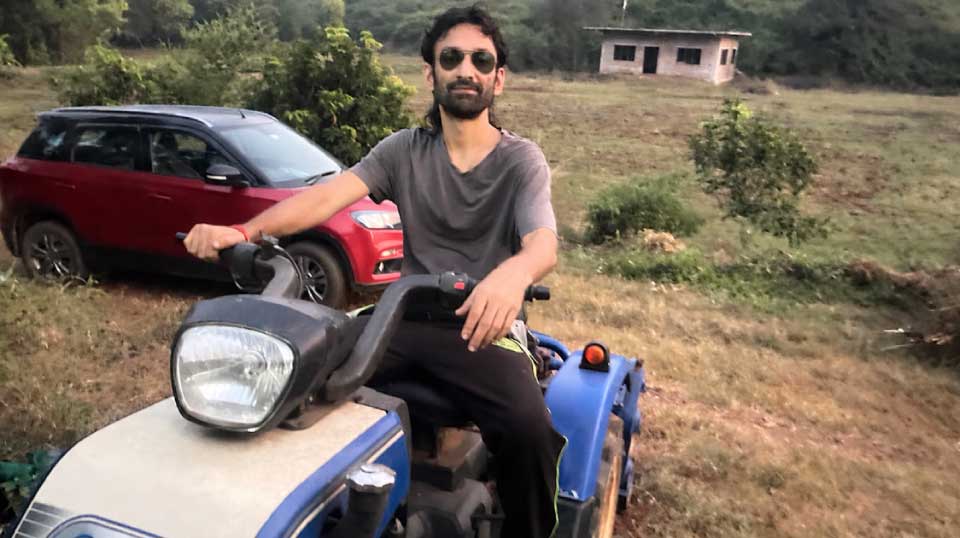
He started with vegetables and lost money within a year. Delivery cost too much, and nobody would pay more for organic, and “aunties still want to bargain.” Then he tried growing arhar dal, pigeon pea. The plants produce over several seasons without re-sowing the land. He expected to harvest about 900 kilos. Until the parrots came for his plants. When they were done, he barely harvested 60 kilos. “Some things you only learn when they happen. There is no YouTube video. No GPT can tell you this.”
Chemical treatment was not an option. Spraying would have killed the parrots, the bees, the insects living on the plants and the life in the soil, and that was against jeev hatya, his principle of not taking life. So he cleared the plants that had been growing for a year and a half. It was devastating. He does not dress up why they had to go: “Capitalism won, and I have to generate revenues from that land; that’s the reason I bought it.”
Nitin remembers a different Siddharth in college. “I never saw him talk about these things with the kind of passion he has today.”
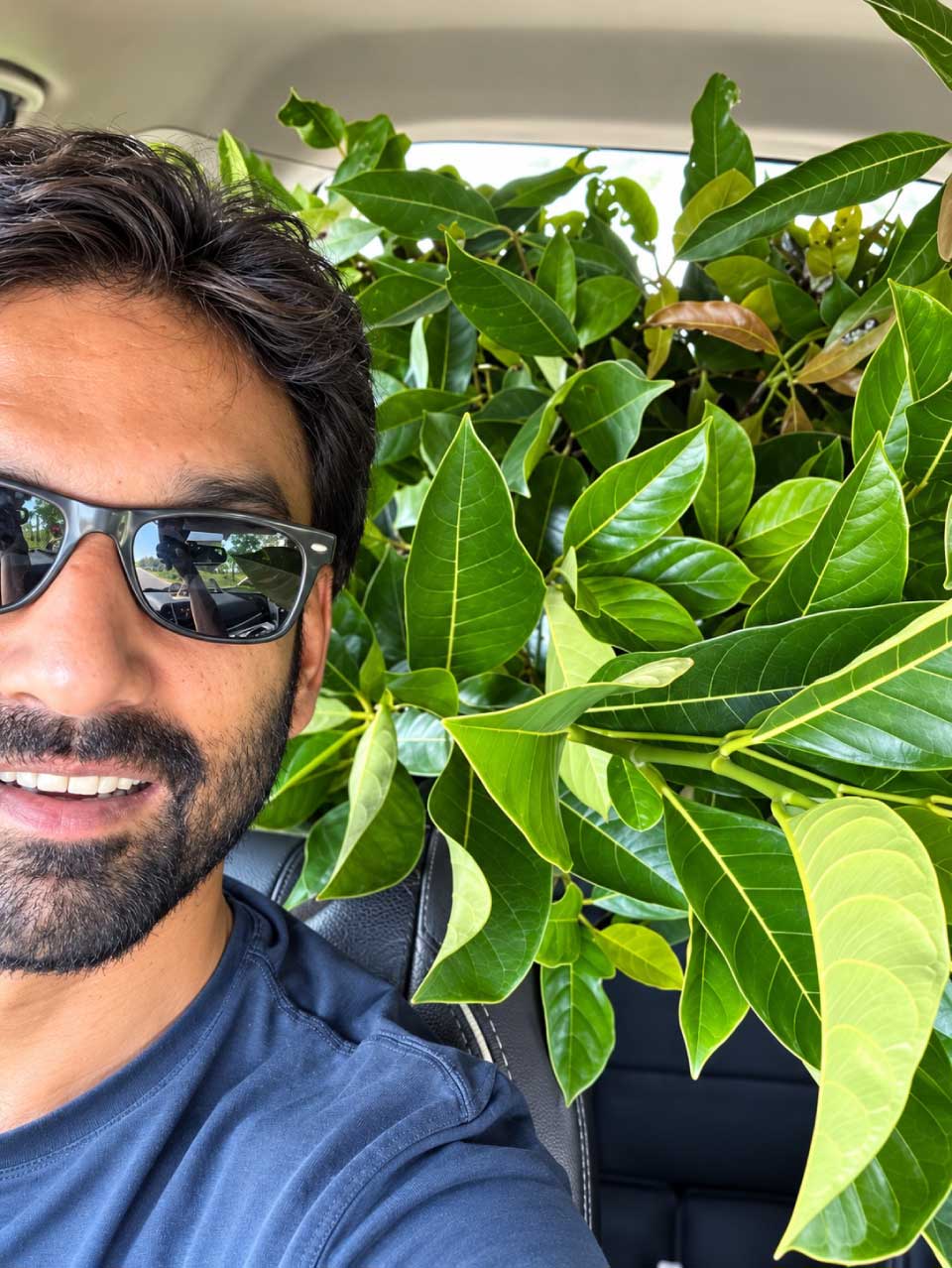
Lessons were learned from the pigeon pea fiasco. Growing any sort of fruit was an invitation to birds, insects and small animals. So except for a small patch of veggies for the family kitchen, he moved to medicinal plants. Moringa, grown for the leaf, takes up most of the land. The last acre is black pepper. What if the parrots return for a hit of spice? He hopes not. “Sorry, parrots, I’ve paid my karma. Find another farmer.” He says the plan is to start with selling locally and export after 2027.
45 degrees
During that hot summer between spells of work on the farm, he built Scan My Shadow. Again, a leap into the vast unknown. “I had no idea of technology, how it works. But I said there are tools available.”
For ₹498, Scan My Shadow will give you a detailed report on where your personal information may be exposed, with instructions on what you can do about it yourself. Siddharth is clear about what it does: “It’s not life-changing, ” but it’s capable of leaving you stumped. He assembled it himself using external tools. “The whole idea was not to hire anybody ever.” The scan itself comes from OSINT Industries in the UK. He says once a report is delivered, the system auto-deletes all the customer information provided for the scan. Names are not asked. Only the phone number is retained as a record for invoicing to comply with Indian law. “I made this to ensure there are no data leaks from Scan My Shadow.”
Anyone can rent the same tools. “Yes, there are other platforms, but not for this price tag.” And he doesn’t pretend this is anything but an itch he wanted to scratch. “This was never a legacy business that I will give my kids.”
don’t fancy it
As a boy, Siddharth says, he didn’t want to be anything in particular. “I just wanted to live my life. Do all the things a small-town boy saw on TV.” Mostly, he wanted to stay out of the timetable his parents lived by, not get boxed into a 9-to-5. So when work starts to resemble Groundhog Day, he leaves. “When I reached a threshold, I said, okay, what’s next?”
What he has kept from job to job is a way of selling, “under-promising and over-delivering”, because it builds trust, he says. Asked how he decides what to promise, he says honesty is a strategy, not a constraint he works around. “Don’t fancy it, don’t sugarcoat it. Be honest. In a country of 1.4 billion people, there’s plenty of clientele.”
He thinks the farm is what he is meant to do – unpredictable enough that it will hold his attention for a long time. “But I don’t want to say something that contradicts my CV. Let’s see what happens next.”
