
Shravani Matodkar planned a party for her fifteenth birthday and invited all her friends. Then, “one unfortunate thing happened in my house”, and the party was called off. The next day at school, a classmate told her she’d returned the present she’d bought because there was no longer a party to bring it to. Shravani was taken aback. “I was like, how can you say that thing? It’s so bad. If you had to give it, you would have given it to me today.”
Sometime later, she sat down to draw; a sketch of herself surrounded by stacks and stacks of gift boxes. She told herself, “One day I will do something that I will have my own gifts all around my house, and I will get tired of gifts.”
She’s never told anyone else this story before, she says, her voice quavering with righteous indignation. She seems bemused that she told us at all. “That was one of the major reasons why I wanted to have something like this where nobody feels that they don’t deserve gifts,” she says. No one should need an occasion to give a gift. “You can just buy things for yourself also.”
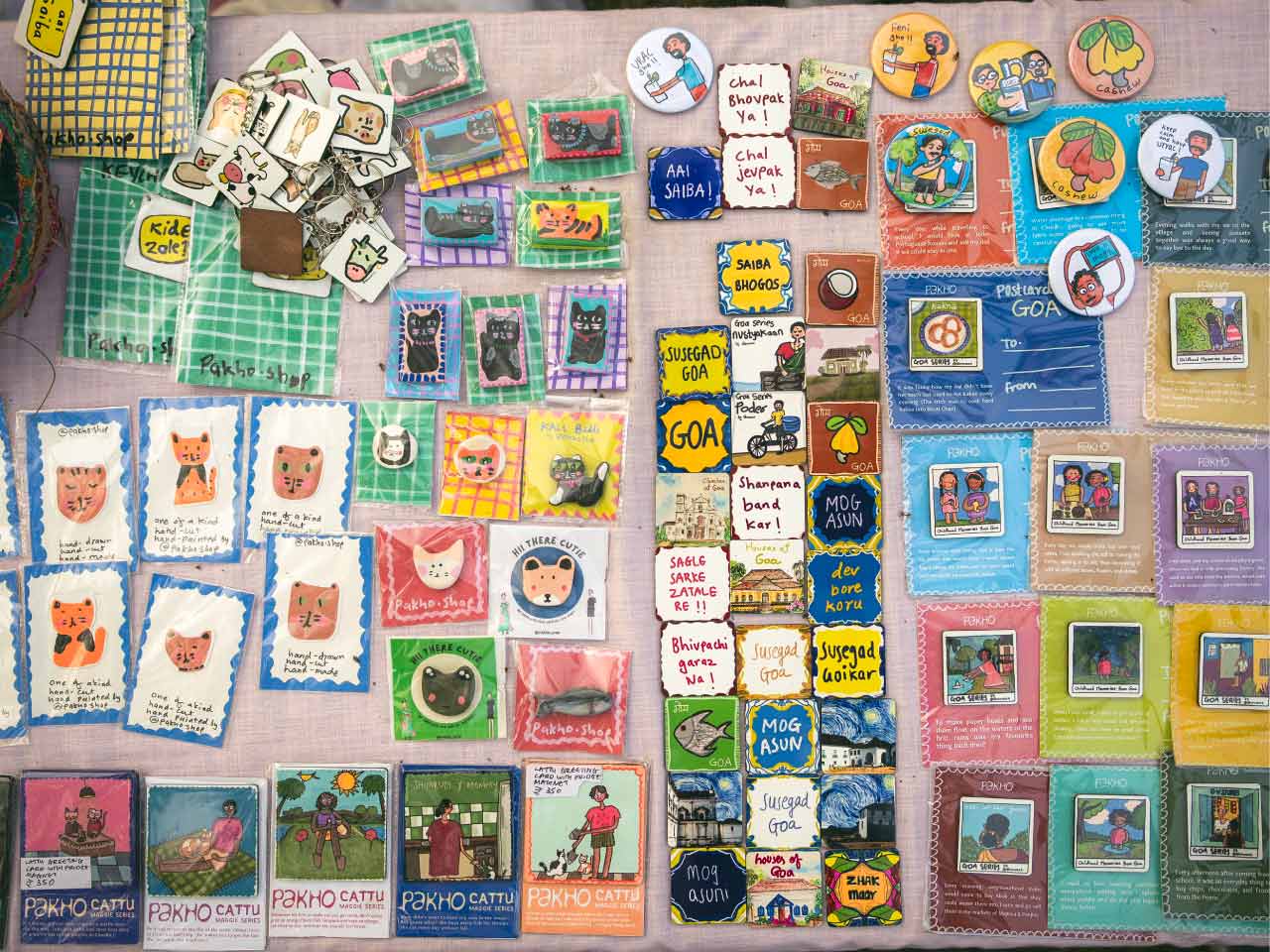
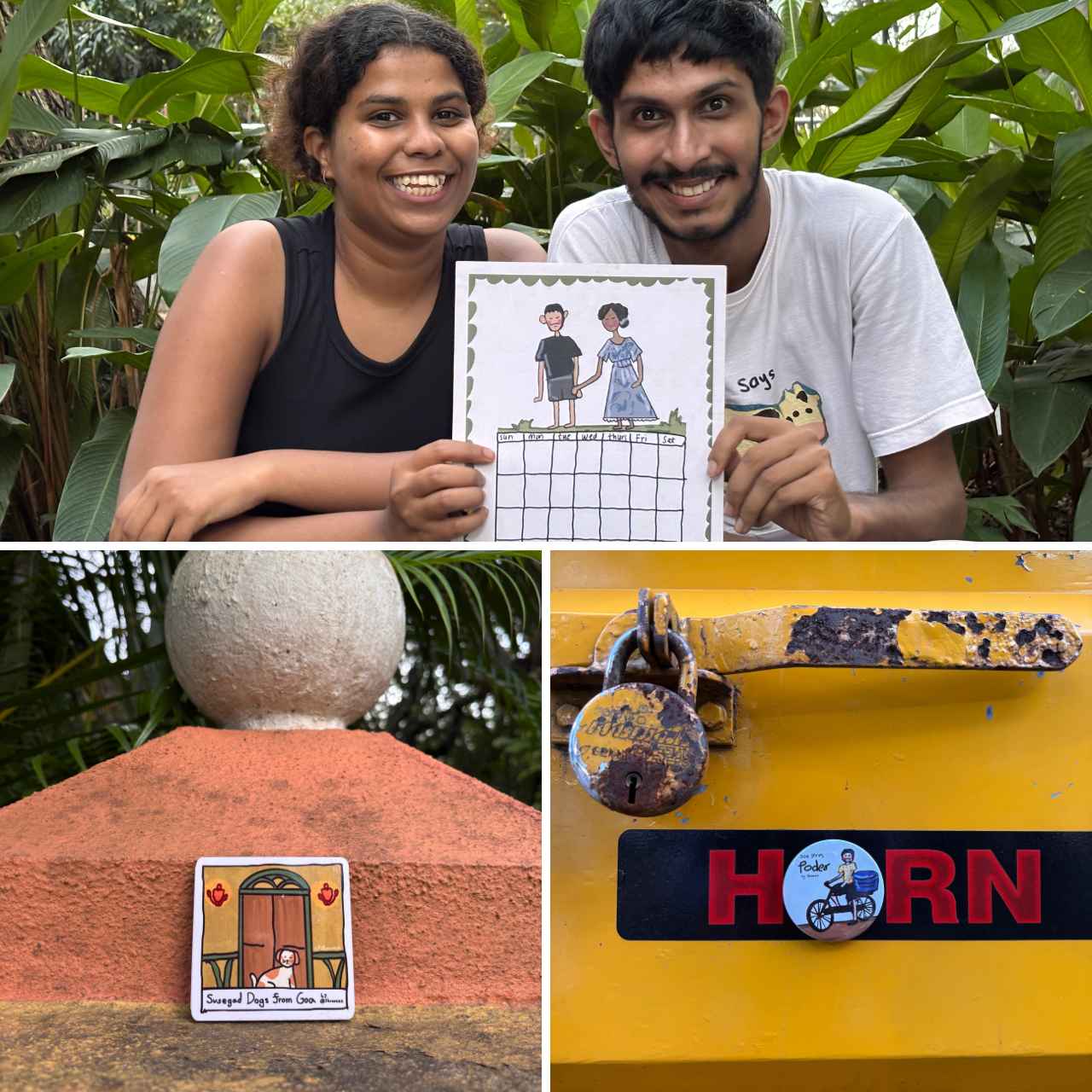
Shravani is 24. I first met her and partner Joshua Rodrigues, also 24, at an underground community fair in Panaji. Josh barely spoke; Shravani did all the talking for both of them and more. Their Pakho Shop sells small-batch, artist-made merchandise made from materials like clay, wood, and paper: “cute things.” Pakho means butterfly in Konkani, and cats are a recurring theme. The expression is playful and iridescent. Shravani is the Artist. Josh is her Theo van Gogh.
cat with a fish
Shravani has been drawing since she was small. Before her board exams, her drawing teacher ran into her father and asked him to make sure his daughter never left art. Her father kept that to himself for years. Shravani took science because she wanted to study architecture. But she hated physics and chemistry – they made her miserable. As her friends scattered to other colleges, she came back to her colours and canvas. “I can have the worst of the worst days, but if I’m putting my thoughts out by drawing or by writing or by doing anything which has my hands involved, I always feel better.” Discouraged by a relative from studying overseas, she chose the Goa College of Architecture and graduated in 2025. Her teachers, she says, disliked her loose, freehand style. One of them tore up her final presentation sheets and told her to go to an arts school if she wanted to use whatever colours she liked.
The style was a choice. She tried mainstream art for a year before going back, on purpose, to drawing like a child. “That’s where my true self comes out.” When people call her work minimalist, she takes it well. “For other people, it feels it’s very minimal, or it’s so simple, it’s just one line. But I know how we’ve got that one line, by doing hundreds of lines which have gone all over the place.”
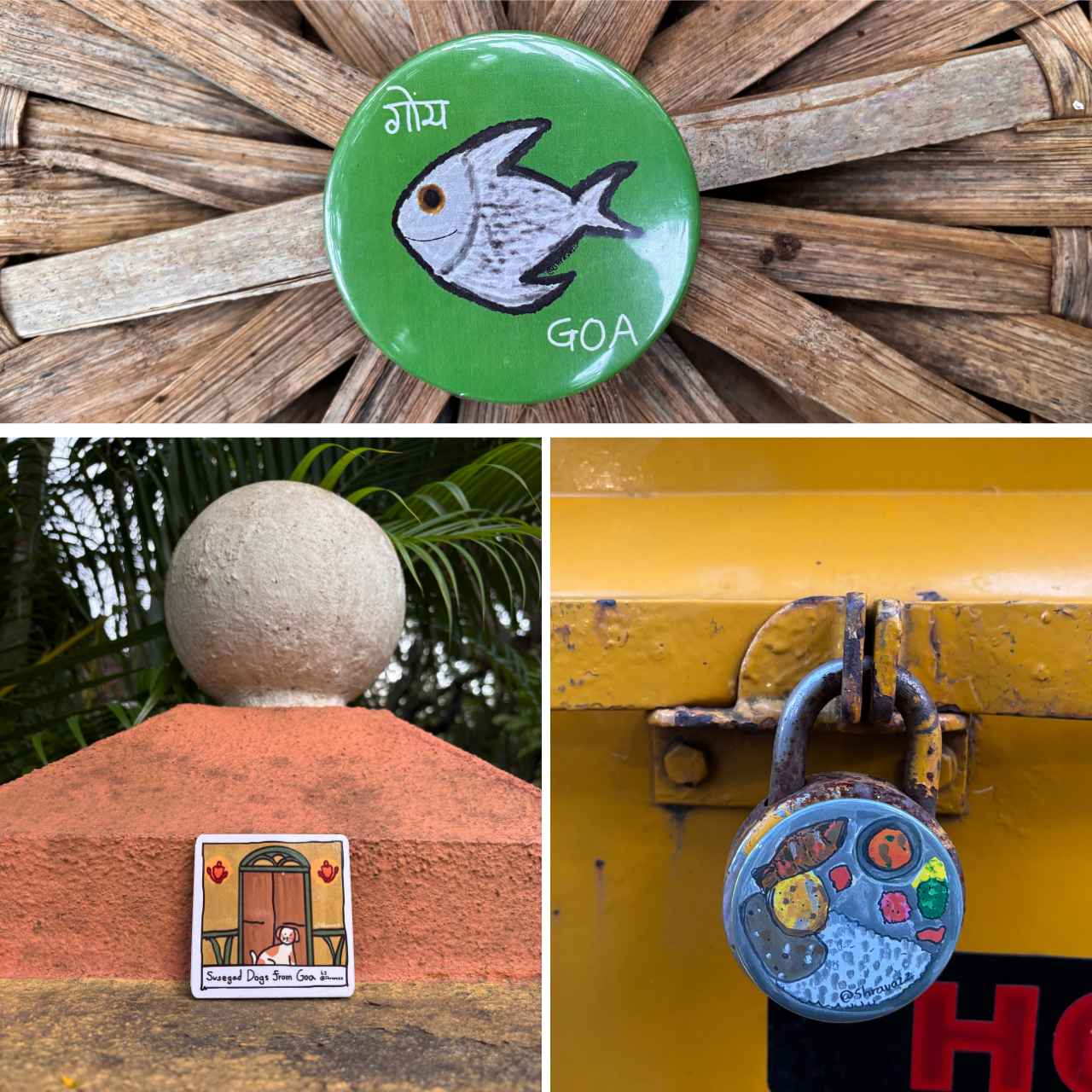
Pakho was Shravani’s first, before it became her and Josh’s. Fed up with the piles of art all over their house, her mum gave her an ultimatum: sell it or give it away. At first, she sold her art through Instagram; then her account got hacked. Her friends Rajat and Shubham encouraged her to start again. They pushed her, she says, to choose a memorable name in Konkani, a name that was quintessentially her. They shot down every name she came up with until she landed on Pakho, because each butterfly is different from the next. “From a caterpillar you become a butterfly; then each butterfly is different; each butterfly looks nice; then, at the end of the day, they fly high.”
two cats, blue and yellow
Josh has exquisite taste and a head full of ideas. Their first meeting in 2022 went quite badly. He’d accompanied an online friend of Shravani’s to meet her on Chorao, the island her family has lived on for generations. She decided they were “a bit too extra from city” and didn’t respect where she came from. She was annoyed enough to give them the wrong directions home. Josh reached out to her a week later, wanting to meet. Shravani asked him to pick her up from college, assuming he’d be put off by her demand and wouldn’t bother. He did. As they sat, she found herself telling him about her dreams, which were sometimes dark and sometimes full of frogs. He listened, and said nothing, and she thought he wasn’t interested. Then she showed him her drawings and told him she didn’t want a job; she liked art. “One day you’ll start minting your own money,” he told her. She says it was the first complete sentence he spoke to her.

Josh’s side of that evening is different. He was doing too many things at the time, he says, and was “very low.” He spent his days recording sound for a documentary, and the art he liked was “extremely dark.” Then along came Shravani with her talent and her unfiltered ways. “It was a long time since I had talked to a person who was so genuinely speaking about life without any filter.” We don’t know if affection walked in first or a genuine appreciation for craft; we didn’t think it mattered. She is the Artist. He is her Imroz.
Until she was about 15, her grandmother was the only person who told her she was the best. When she died, Shravani felt that void and poured it into her art. Josh filled it without being asked. “I didn’t ask for those things,” she says. “Those small reminders where things went in my mind that, okay, maybe what I’m doing is really making some difference.”
tournée du chat noir
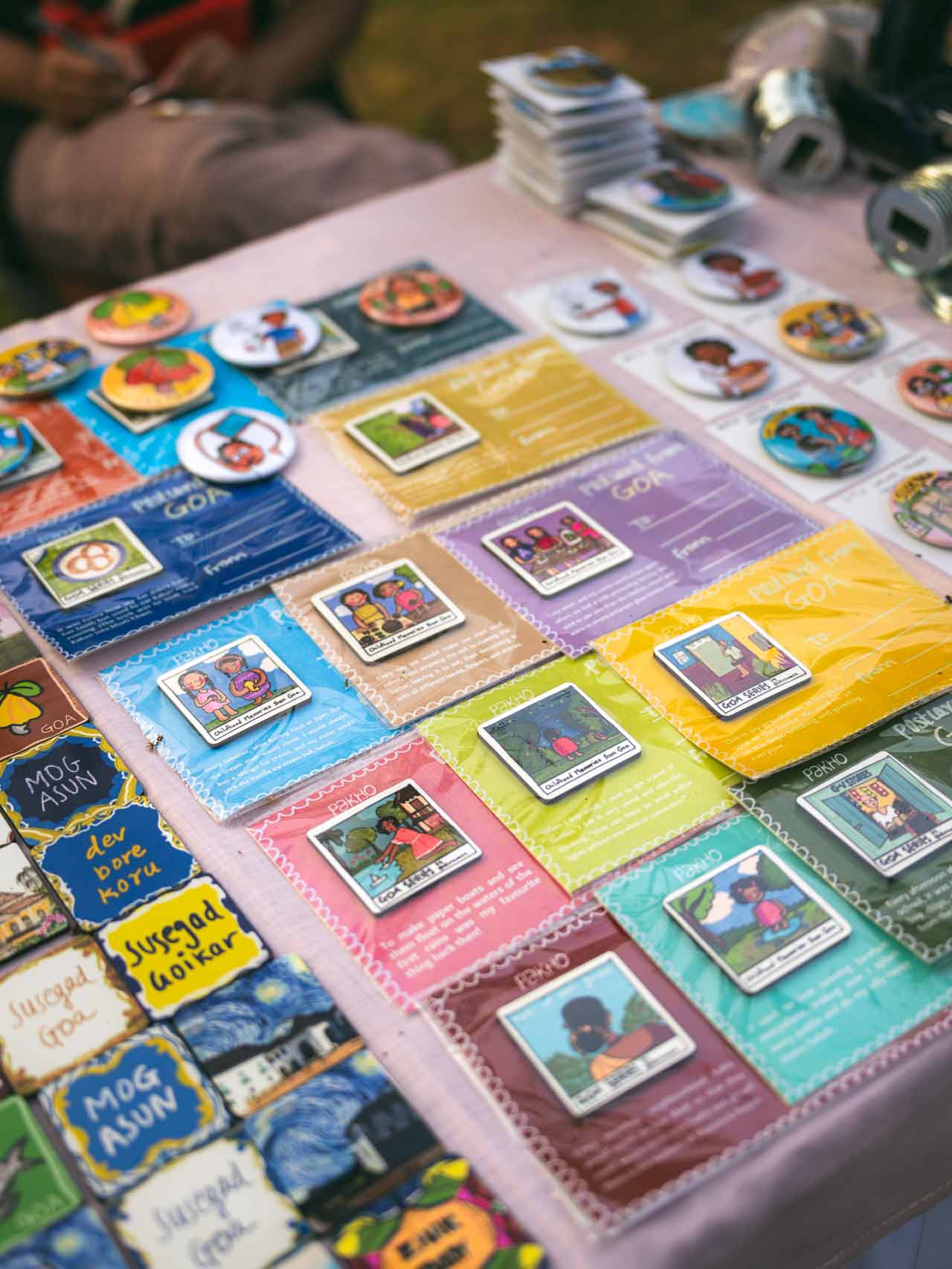
Josh watched Pakho from the sidelines for a while before asking to come aboard. “More than anything, I wanted it to be seen much, much more, by as many people as possible.” Since then, he’s looked after the people side of the operation – customers, collaborators, stores, events. He describes his role as the last five per cent of everything. Before Josh, she only went to pop-ups close to home, making limited items and waiting for them to sell before starting a new batch. “He made me believe that I can go crazy,” she says. “Then I went crazy.” Pakho makes collectibles and gifts – everything from fridge magnets to handmade books to stickers – sold through select stores and the Museum of Goa on commission. They also design and make in bulk for other brands, including one in the UK. Shravani says that she wanted to make small things that anyone could afford. “You can just buy a ten rupee sticker also and just stick it and look at it every day. You don’t need to buy a gold set or whatever to bring a smile on anybody’s face.”
Her first “sold out” came at Meenali Bar, her father’s bar, which her grandfather owned before him. She went around the groups of customers with a small basket of her products and everything sold. Later, her father gave her a corner on the first floor to sell from. It was unmanned, and people would sometimes take things without paying, so they stopped selling there about six months ago.
fifty-three stations
The cats began with Komaru, a Japanese Munchkin, whom Shubham calls a “meme Russian cat”; he followed her updates on Telegram. Shubham and a friend badly wanted Komaru merchandise, and that became one of Pakho’s first cat products. Later, two cat owners commissioned her to draw all their cats, including the ones that had passed. “That was the moment the ‘cat thing’ became really evident to me.” She says she started connecting with other people’s cats, “and in the process, understanding their emotions too”. For a long time there weren’t as many dogs, because she was scared of them. She has since got over her fear of drawing dogs, because “loving only cats is too biased.”
They run workshops at LaFa, Sachin Gangadharan’s product design studio and material research lab. Sachin remembers a girl at the workshop making five small cat badges on the spot. “I’ve never seen anybody enjoy something so much.” Making a badge is simple and complicated at once, because you have to know the trade as well as the craft. “I think they do both the things, both the trade and the craft, really well.” At Aurawell Cafe, a past avatar of Chupe & co, Sidhant Srivastava describes one of the earlier workshops, a badge-making session. He asked whether they could use bottle labels as the base for the badges. “Joshua took a second to think about it and immediately went, ‘Let’s try it.'” After that, Sidhant says everyone in the room started trying to turn whatever they had into a badge. “Their art meets you halfway”, Sidhant says. Whatever a participant paints or makes, they make sure a lot of that person goes into it. Shubham says he first thought her work was weird. Now, “I feel like she has her own genre.” He says almost everything she puts out has a story behind it.
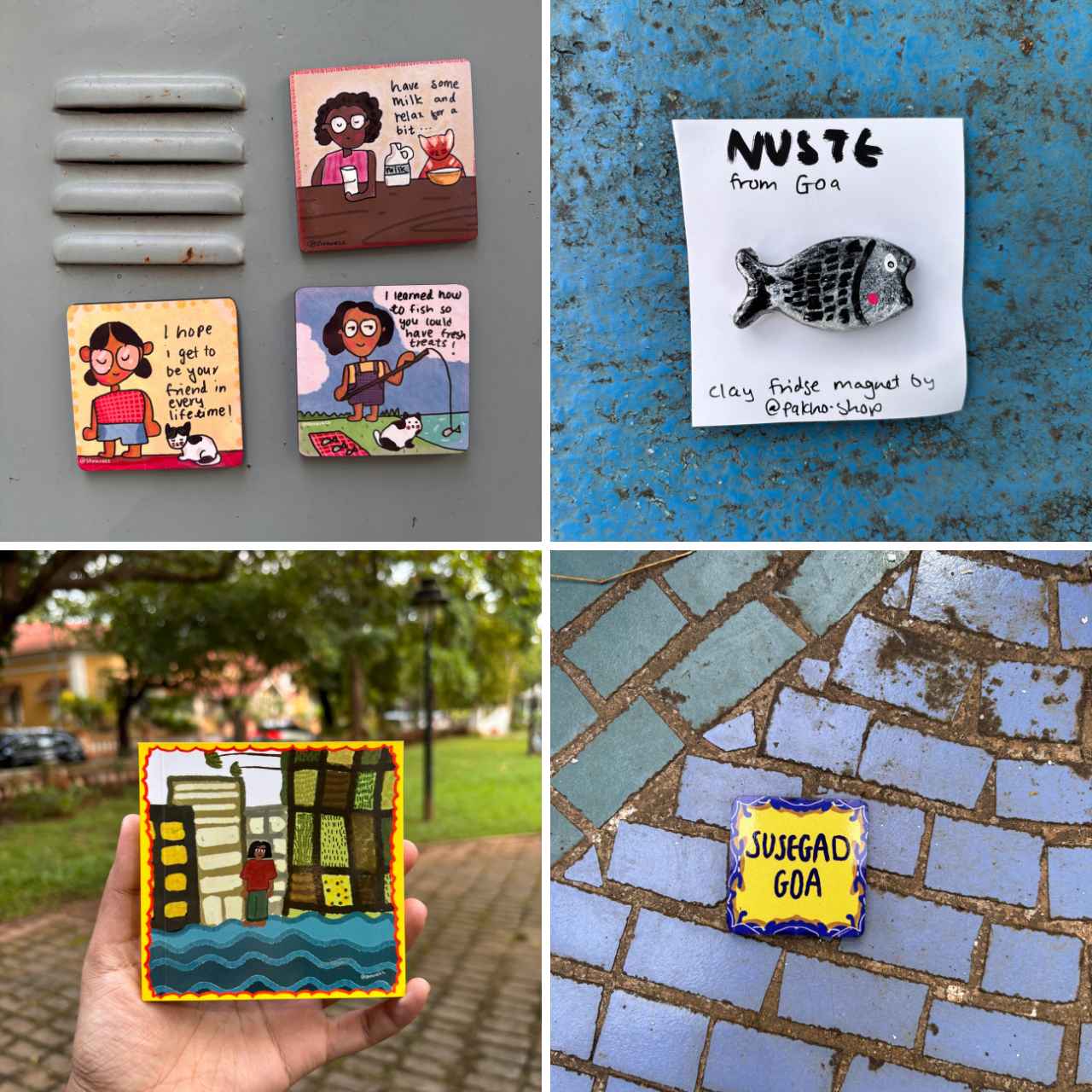
The workshops changed what Shravani wants to do next. She met people who were scared of even picking up a pencil, and she saw how much better they felt when someone encouraged them. “I do have that power where I can connect to people on a one-to-one level.” She is now in the first year of a two-year master’s in social work at Goa University. She wants to learn how to use art “as a medium to bring change in society or in community.”
asakusa ricefields
This December, Pakho is collaborating on an installation for The Food Lab at the Serendipity Arts Festival where Zeroposro’s Jonah Fernandes will lead a session on how local the Goan fish thali really is.
Since September 2025, Pakho has brought in steady revenue, give or take a few thousand rupees every month. Their studio is small; the stock takes up most of the space. They plan to have their own space for stock before the end of the year. For now it’s just the two of them, with Joao, Josh’s father, helping with production.
Since we interviewed them, Pakho has started selling outside Goa – six cities and counting. One outlet that does not usually sell anything made room for the magnets as a trial. “It’s been crazy”, Josh tells us. They are now trying different products in different outlets to see what sells, and a lot of it does. They want Pakho “in every airport, in every city, and in every small village.” She is the Artist. He is her Diego Rivera.