


Garima Kaushal has a theory about when owning a pet stops being FUN. At first, everyone wants to walk the dog, feed the dog, and play with the dog. The whole household is watching YouTube videos about training. It happens around the second year or so, she says. Still loads of fun, but the everydayness that comes with settling into a routine changes things. The dog still needs to be walked when you’re tired, when you’re busy. When you have somewhere else to be. “I love my dog, but I kind of have to do this, and that means that I can’t do something else.”
She’s describing her own experience, but it could be anyone’s family, really, and the reason sploot, the company she started with Arnav Sahni, exists.
a puppy sort of life
Garima did not grow up with pets. With three children, her parents said no. “I’ve heard all of those typical dialogues that moms crack: ‘there are enough dogs in the house’, ‘dog or me’.” Garima’s first dog arrived after her younger brother died, brought home by her father to give the hurt they were feeling the shape of love. Her mum held out for two weeks, then melted. “Now she can’t stay without him.”
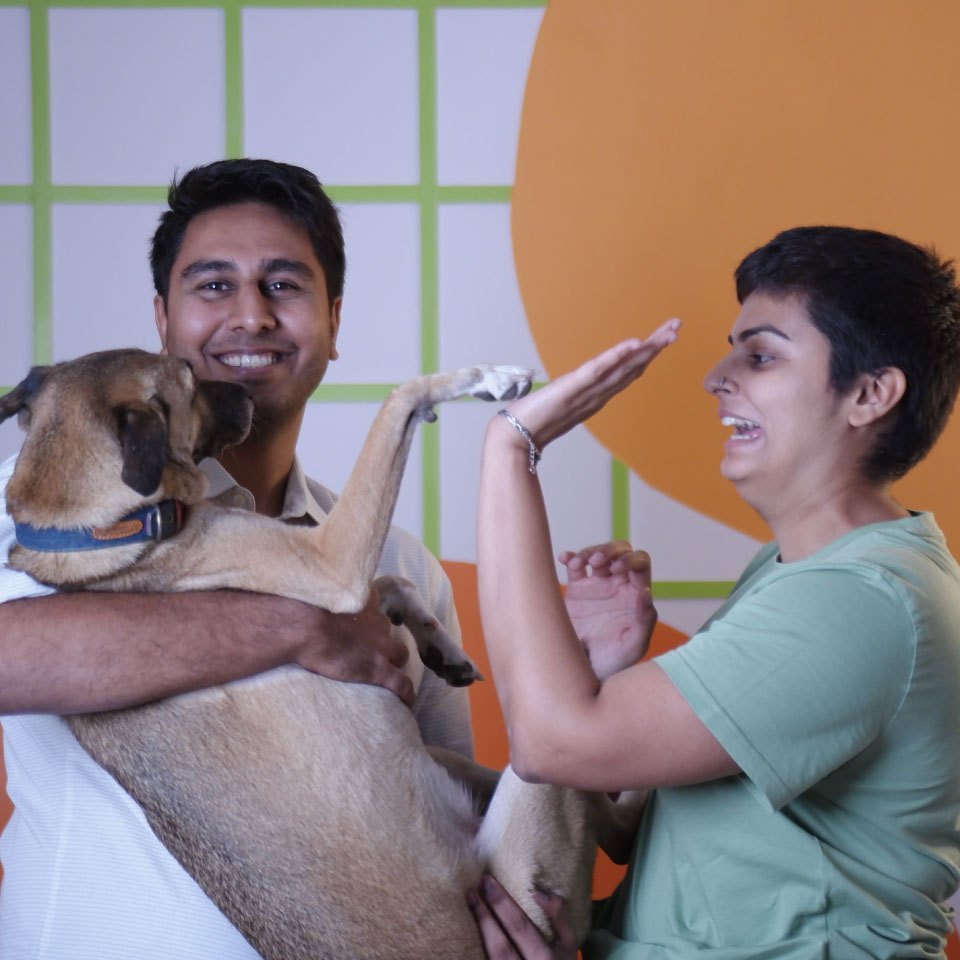
Garima was already through college and headed to her postgraduate degree. She’d already met Arnav in college. They were part of a small group studying economics in a commerce college and did theatre together. Garima has the air of someone who’s had pets all her life. Arnav actually has. They started sploot in 2019 and married a year later. Their dog, Sriracha, a gorgeous rescued Indie, joins our interview at this point, drawn by something in the garden beyond the screen door. She came with the name, Garima tells us. The rescuers had already christened her, and they saw no reason to change it.
Garima never set out to be a founder. She says she “wanted to have one job, one apartment, nice life, going out, coming back, and not worrying about anything”. An agency, an MBA and a brand job at the company that owns Budweiser in India followed.
When they decided to start something of their own, they decided the sector had to interest them enough to spend years working in it. They drew a shortlist of things to build; it came down to two: travel and pet care. They picked pet care. Garima says what kept her coming back was “the amount of impact you could have.” Within a year, travel came to a standstill.
version three or four
sploot started off as an app to keep a pet’s medical records so owners had them on file and could get a second opinion. They’d spoken to owners who’d lost pets and found much in common. Records weren’t always kept properly, which made it harder to seek another opinion or understand what treatment they’d received, or why.
Arnav spoke of his own struggles to find adequate care for his elderly dog, Circuit, thirteen or fourteen at the time. He was struggling to walk and needed an X-ray. Finding somewhere to X-ray a dog was hard enough, and the only one they found was “two basements down.” Then the queues at the vet. “Everything felt broken.”
The app didn’t survive. Garima says veterinary care was one of the first things they considered because owners ranked it highly. But apart from vaccinations, a healthy dog might go months without needing a vet. Pet owners only need to keep medical records for emergencies or illnesses, so the app was rarely opened.
Then COVID, the great destroyer, turned things on their head with an unexpected proliferation of new pet owners. Studies in Britain and Australia later found that the pandemic rarely created the wish for a pet; it removed the reasons not to have one, lack of time and space at home. In India, Mars Petcare, which sells about half the country’s packaged pet food like Whiskas and Pedigree, estimated that puppy adoptions rose by 50 to 100 per cent in 2020. sploot, already creating content and programming, now veered into content for new pet owners, ran online training cohorts, and built meal plans for home-cooked food. Owners would come back asking them to cook the food rather than send the plan. “Maybe what people actually need help with is the execution part of it also, not just the information.”
Arnav kept his day job in finance until 2022, and Garima, he says, did most of the heavy lifting. “So in that 2019 to 2022 phase it was like 85 to 90 per cent of the work being done by Garima.” He remembers three months spent stitching personalised bandanas for dogs.
Esha Shekhar, researching training for her two-month-old pit bull terrier called Flash, found them through a Google search in April 2021. Garima ran Puppy Basics training cohorts with an outside trainer. “She was continuously taking feedback. She was continuously listening in. She was super enthusiastic. Her energy is infectious.”
When Esha moved to Gurgaon and couldn’t find a good walker, Garima came to the rescue. sploot was launching walking services, and Esha signed up at once because of the founders. She’s been using it for about four and a half years now. The first year of dog walking ran on WhatsApp groups, with someone from the team coordinating between the customer and the walker, and Strava tracking the route. Esha says the walkers are always on time and well trained, and a replacement comes when the assigned walker cannot.
Garima says the WhatsApp system could only handle so much. Though they’d always intended to build a technology product, neither came from a tech background. Arnav estimates they tried five to ten ideas before settling on what they wanted to build. They worked with freelancers and agencies and then built an in-house team once they raised money. Kapil, who had worked with them as a consultant for about five years, came aboard full-time as CTO. They’ve since rebuilt their tech stack from the ground up. The app allows you to book walks and home grooming and order fresh food. sploot’s website lists 25 cities, though Arnav says in smaller cities one groomer can be the whole operation.
Mana Vidyalankar was among sploot’s first fresh-food customers, when orders went through WhatsApp. She now leads design at sploot and says you would not guess they run a business. After her first launch, the founders posted in the team channel and named her. They have done the same thing every time something goes well. “It’s always attributed to the person who worked on it.” She says their approach to work is very different. Garima, she says, juggles many threads at once, while Arnav is “extremely attentive”, the one she looks to in a meeting because she knows he’s following.
Garima says running her own company has forced her to recognise things about herself she otherwise might have avoided. Some of the lessons have been uncomfortable. She calls leadership “super isolating”, and says leading a team is “always like a little bit of a performance that you’re putting on.” She says the reward is the satisfaction of doing something “where there is nobody else who can be blamed, really. It is you.”
no bad dogs
India’s pet care business has grown considerably since sploot started. According to Redseer Strategy Consultants, spending on pet-care products and services more than doubled from $1.6 billion in 2019 to $3.6 billion in 2024. In 2023, Entrepreneur India, citing a Market Decipher report, forecast this growth would nearly triple by 2032. The same article said most Indian pet owners are on their first pet while owners in mature markets are on to their second or even third. Samriddh Dasgupta, then chief marketing officer of Heads Up For Tails, told afaqs in 2023 that owners increasingly saw their pets as babies rather than accessories, and this changed the services they chose. Money has faithfully followed the trend. sploot, themselves, have raised outside funding.
Their first meeting with an institutional investor began with him pulling out a memory book about his dog. That kind of belief, Garima says, works at seed stage. “Of course that’s not enough.” Arnav expected numbers to do the persuading. They did not. “Because we are also in that VC world where audacious thinking is what sells. And that didn’t come naturally to me at all.”
Arnav says most investors prefer to put their money into veterinary and pet food startups rather than startups like theirs that try to solve the problem from the other end. As sploot’s own initial efforts showed, with a healthy animal, healthcare is a once-a-year and done. While it may not seem that way with an unwell pet, Garima says healthcare is not “95 per cent of the problems”. Most of what an animal needs comes from daily rituals, and neglect often shows up years later as an obese, bored dog. What sploot hopes to build “prevents issues more than solves them once the issues have already arisen.”
They thought their audience would be first-time pet people, but found even second-time owners want to do better. She offers her own parents who now have two dogs as context, “we did all the wrong things with them because they were our first dog”. Garima found that experienced dog owners could be just as interested in learning. Some were bringing home a puppy after ten, fifteen years. Others wanted to learn what they wish they knew the first time around. She says the content available back then made new pet owners feel like they were failing at everything. An expert was always there to make you feel bad if you didn’t do something a certain way. Her approach runs on one rule: no judgement.
Garima remembers how much advice came from people who already knew a great deal about dogs. She wanted first-time owners to feel welcome asking questions while they learnt how to care for their pup.
dogs and angels
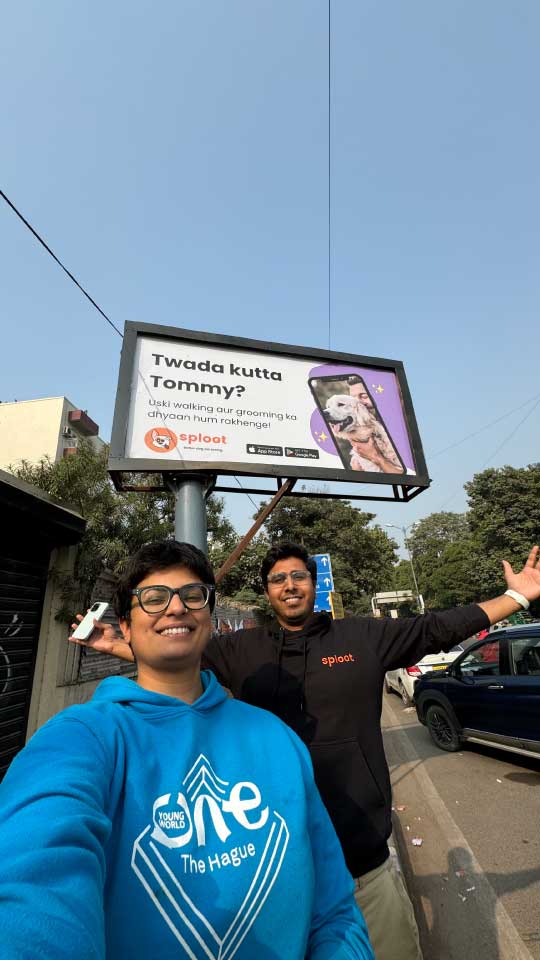
In countries like the US, walking someone else’s dog has long been a way for kids and college students to earn pocket money, and apps like Wag and Rover have turned it into gig work. In India, the walk often falls to the house staff or a local walker who works the colony. Garima and Arnav assumed their customers would be pet households this arrangement left out. “We thought nuclear families only, people who don’t have a lot of people in the house who can walk their dog.”
Joint families and multi-generational households signed up as well, “which again was the antithesis of what we started with.” Grown children book walks for parents they no longer live with. Parents call for support when something goes wrong, and the child pays. Arnav describes homes with grandparents and young children where the staff have more pressing work, and the dog comes last. sploot found a place in Indian households as they already were. The market was far wider and less defined than the founders accounted for.
Walkers come through job ads, in regional languages, or through other walkers. But in India, this work also carries a stigma around picking up after the dog. Often, walkers will treat the job as a stopgap. “They look at six months.” sploot puts some workers in high-demand markets on contracts with a guaranteed minimum. Where demand is thin, others are paid per booking. Arnav says some walkers prefer payment per booking because they already have other jobs and don’t want to commit to a fixed schedule. A guaranteed amount works better in areas where sploot has enough bookings to keep someone occupied.
Some walkers have been with them from the start. In the early days, the team trained the walkers themselves, using Sriracha as the model. When she relieved herself, the team picked up after her to show it was ordinary. But they’ve stopped trying to change minds. “We just realised it’s too much of an uphill battle to fight.”
Arnav says they now explain that other people are already doing the job and doing it well. Garima has found that many applicants do not see dog walking as a career. Some are studying at vocational training colleges. Others plan to move into a different job after a few months. By comparison, groomers often arrive with professional training or salon experience.
Dog walking also demands a different schedule. A thirty-minute walk at six every morning, rain or shine. It isn’t gentle. Walkers must navigate strays, other dogs, and sometimes their owners. Unlike a grooming appointment every month or two, it requires someone to show up the following morning.
Arnav says transparency is their core value. Because sploot sits between the customer and the walker, it would be easy to pit them against each other for a little more margin. When a dog or a walker is hurt on a walk, sploot has a policy to cover medical expenses from service-related injuries. “It needs to be something that we promise on both sides.”
Garima says among customers who complete a month of dog walking, roughly 70 to 80 per cent book another month.
Sure, a resource-rich company could copy what they do, and Arnav expects that to happen sooner or later. “It’s already happening.” sploot’s head start, he says, is four years of knowing what happens to a customer when a walker takes two days off. “So the ultimate defence, I think, will be capital.” Garima puts it down to a person on the other end of the line. Customers who left for another brand often come back to sploot.
heartbeat at my feet
People used to bring them everything: someone who fed a hundred strays and wanted food cooked for them to people looking to rehome a dog. Arnav says sploot would try to help but that took a lot of their focus away from the business. Their goal is to move from investor money to profitability and “right now we just sort of put those blinders on.”
They also paused their organised walks and removed some social features from the app. But things in the sploot community have taken a life of their own, like the WhatsApp group from their Sunday walks, Garima says, which still goes out every other weekend, “even when we are not there.”
Garima wants to bring back community activities once they have a clearer idea of what people need, though she has yet to work out exactly what the next version of the community will look like. They also want to add more services. Garima talks about boarding and training. Arnav wants to add vets who visit at home, and open the app to cats. The needs of a puppy differ from those of an older dog, and they want sploot to be useful throughout that time.
What keeps them going, we ask. “We still care about the problem, we still have ideas we want to build, and we still want to be the people doing this. The job’s not done.”
